
TL;DR:
- Building an effective natural skincare routine relies on a core set of five essential products.
- Personalizing your routine based on climate, age, sensitivity, and goals enhances results.
- Certifications and transparency are key to choosing genuine natural and sustainable skincare products.
Shelves packed with hundreds of products, every bottle claiming to be “clean,” “pure,” or “naturally derived.” Sound familiar? If you’ve ever stood in a beauty aisle feeling more confused than confident, you’re not alone. The truth is, building an effective natural skincare routine doesn’t require dozens of products or a chemistry degree. It requires the right framework, the right ingredients, and a little bit of consistency. This guide walks you through a practical, evidence-based workflow, from choosing genuinely natural products to personalising your routine for your unique skin, so you can stop guessing and start glowing.
Table of Contents
- What you need to start your natural skincare workflow
- Step-by-step: Your daily natural skincare workflow
- Personalize your workflow for better results
- Choosing natural over synthetic: What the evidence says
- Our perspective: The uncomfortable truths about building a natural skincare workflow
- Elevate your natural skincare routine with ZenChemy Lab
- Frequently asked questions
Key Takeaways
| Point | Details |
|---|---|
| Must-have essentials | Quality ingredients and fewer, well-chosen products are the foundation of an effective workflow. |
| Daily basics matter | Consistency with cleansing, hydrating, and protecting is more important than constant product changes. |
| Personalization is key | Adapting routines to your skin type and needs maximizes benefits and reduces unwanted reactions. |
| Natural can outperform | Evidence-backed natural routines can match or exceed synthetics in performance and safety when chosen wisely. |
| Sustainability counts | Prioritizing eco-friendly and traceable ingredients benefits both your skin and the planet. |
What you need to start your natural skincare workflow
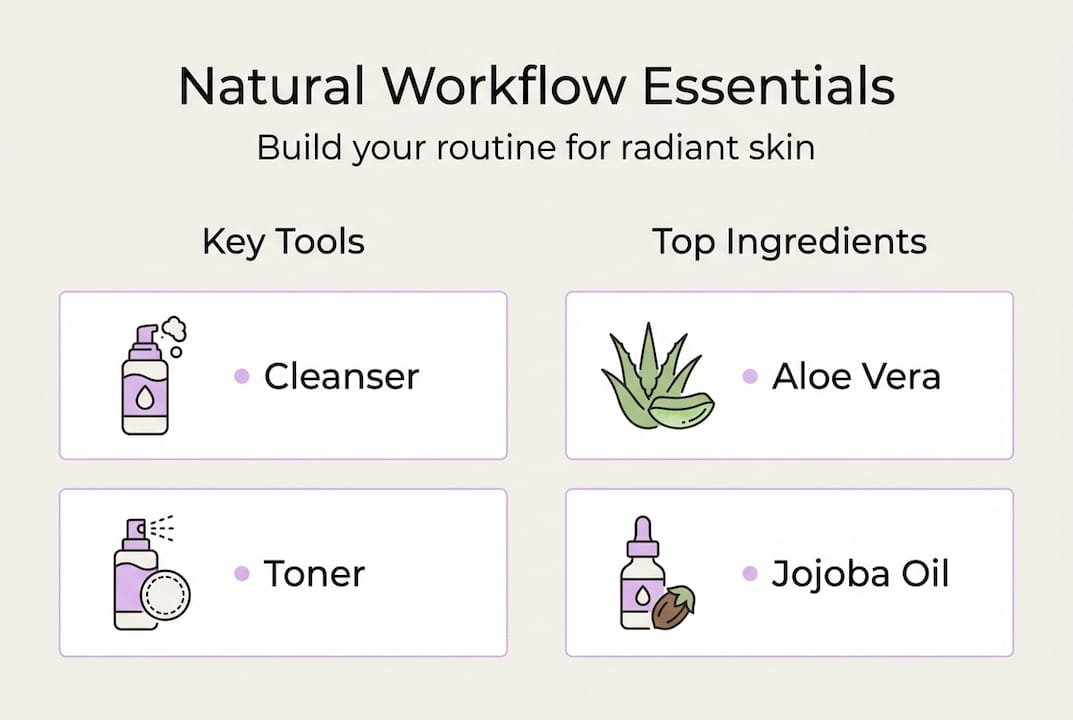
Before you begin, you’ll want the right tools and ingredients. A strong workflow starts with a curated product lineup, not an overwhelming collection. Think quality over quantity.
The essential five ✅
Every solid natural skincare routine is built on five core product categories:
- 🌿 Gentle cleanser — removes impurities without stripping the skin’s natural lipid barrier
- 💧 Toner — rebalances skin pH and preps for absorption
- ✨ Serum — delivers concentrated actives like vitamin C or fermented botanicals
- 🧴 Moisturiser — seals in hydration and supports the skin barrier
- ☀️ Mineral SPF — protects against UV damage using zinc oxide, a safe and effective blocker
Best natural ingredients to look for
Not all natural ingredients are created equal. Some offer genuinely impressive skin science behind them. Top natural ingredients worth prioritising include adaptogens like ashwagandha and reishi, which help the skin manage environmental stress. Fermented botanicals deliver bioavailable nutrients that the skin absorbs more efficiently. Aloe vera soothes and hydrates, rosewater tones and calms, and tea tree oil offers antimicrobial support for breakout-prone skin. Shea butter and jojoba oil both mimic the skin’s natural sebum, making them ideal for deep nourishment without clogging pores. Skin care resolutions 2026 highlight these as the most preferred natural ingredients heading into the new year.
How to choose artisanal or eco-certified options
The term “natural” on a label means almost nothing without certification. Greenwashing, when brands use vague environmental language without evidence, is rampant in the beauty industry. According to sustainable beauty practices, 72% of consumers now prioritise sustainability in their beauty choices, yet many still don’t know how to spot greenwashing. Look for third-party certifications like COSMOS, NATRUE, or USDA Organic. Upcycled and locally sourced botanicals, like Kakadu plum or willow bark, are strong indicators of a brand committed to genuine sustainability. Our eco-friendly skincare guide breaks this down further if you want to go deeper.
Ingredient comparison table
| Ingredient | Primary benefit | Role in routine |
|---|---|---|
| Aloe vera | Soothes, hydrates | Toner, serum |
| Jojoba oil | Balances sebum | Moisturiser, serum |
| Shea butter | Deep nourishment | Moisturiser |
| Rosewater | Tones, calms redness | Toner |
| Zinc oxide | UV protection | SPF step |
| Vitamin C (botanical) | Brightens, antioxidant | Serum |
| Fermented botanicals | Enhanced absorption | Serum, essence |
| Tea tree oil | Antimicrobial | Spot treatment |
Pro Tip: When reading a label, ingredients are listed in descending order of concentration. If water (aqua) is listed first and your key botanical is near the bottom, the formula likely contains very little of it. Prioritise products where your desired active ingredient appears in the top five.
Step-by-step: Your daily natural skincare workflow
With your products ready, let’s walk through the ideal daily routine. Consistency is what transforms a product into a result.
Morning routine
- Rinse or gentle cleanse — A light rinse with water or a mild gel cleanser removes overnight buildup without disrupting your skin barrier.
- Apply toner — Pat rosewater or a botanical toner onto damp skin to rebalance pH.
- Layer your serum — Apply a vitamin C or brightening serum while skin is still slightly damp for better absorption.
- Moisturise — Lock in hydration with a shea butter or jojoba-based moisturiser.
- Mineral SPF — Always finish your morning routine with zinc oxide SPF, even on cloudy days or indoors near windows.
Evening routine
The evening is your skin’s recovery window. This is where the real repair happens.
- First cleanse — Remove makeup, SPF, and pollution with a cleansing balm or oil.
- Second cleanse — Follow with a gentle foaming or gel cleanser to clear any remaining residue. Double cleansing at night is a proven method for thoroughly clearing pores while preserving skin integrity.
- Tone — Rebalance after cleansing.
- Targeted serum or treatment — Apply products from thinnest to thickest consistency for maximum penetration.
- Moisturiser or face oil — Seal everything in with a richer formula than your morning choice.
Weekly additions
Include routine tips for healthy skin for your weekly schedule:
- Exfoliation (1-2x per week): Use a natural enzyme exfoliant (papaya or pineapple enzyme) or a fine sugar scrub. This removes dead cells and allows actives to penetrate more effectively.
- Facial massage (2-3x per week): Gentle upward strokes support lymphatic drainage, reduce puffiness, and improve circulation. Use a jade roller or gua sha stone with a facial oil.
Safety reminder: Over-exfoliation is one of the most common skincare mistakes. If your skin feels tight, raw, or sensitive after exfoliating, reduce frequency immediately. Natural enzyme exfoliants are gentler, but more is never better. Always follow up with a calming moisturiser.
Sample daily routine table
| Step | Morning product type | Evening product type | Why |
|---|---|---|---|
| Cleanse | Gentle gel or rinse | Double cleanse (oil then gel) | Removes impurities at different levels |
| Tone | Rosewater or botanical toner | Same | Rebalances pH |
| Treat | Vitamin C serum | Retinol alternative or peptide serum | Morning = protect, Evening = repair |
| Moisturise | Lightweight formula | Richer formula or face oil | Evening needs deeper nourishment |
| Protect | Mineral SPF | Skip | UV protection is a daytime need |
Pro Tip: Apply your serum to skin that’s still slightly damp, about 30 seconds after toning. This boosts absorption significantly because damp skin is more permeable. Patting (not rubbing) the product in also reduces friction and potential irritation. For more guidance on building your body care routine, start with these foundational steps before adding anything more advanced.
Personalize your workflow for better results
A one-size-fits-all routine won’t deliver the best outcomes. Your skin is unique, shaped by genetics, environment, lifestyle, and age. Treating it as such is the difference between a routine that sort of works and one that truly transforms.
Why personalisation matters
Experts now prioritise skin barrier health over trendy ingredients, and they advocate for science-backed naturals rather than hype-driven formulas. The concept of whole plant synergy, where the full botanical extract works better than an isolated active compound, is central to this approach. It means that a full-spectrum rosehip oil often outperforms a synthetic retinol alternative for sensitive skin because of the supporting fatty acids, antioxidants, and phytonutrients working together.
Inside-out care also matters more than most guides acknowledge. Stress management, adequate hydration, sleep quality, and even gut health directly influence skin behaviour. No serum can fully compensate for chronic dehydration or poor sleep.
Factors to personalise your routine around
Consider these variables when tailoring your workflow:
- 🌡️ Climate: Dry or cold climates demand richer moisturisers and barrier-supporting oils. Humid climates call for lighter, gel-based formulas.
- 🎂 Age: Younger skin focuses on protection and prevention. Skin in your 30s and beyond benefits from targeted actives for firmness and hydration support.
- 💜 Sensitivity level: Reactive or sensitive skin needs fewer actives, fragrance-free formulas, and a stripped-back routine.
- 🎯 Skin goals: Brightening, clearing congestion, firming, and hydration all call for different active ingredients.
- 🌱 Ingredient sensitivities: Some people react to essential oils, certain carrier oils, or high-concentration botanicals. Always patch test.
Using technology to personalise
AI-powered skincare apps can now analyse photos of your skin, track seasonal changes, and suggest adjustments based on your feedback. These tools aren’t a replacement for a professional consultation, but they’re a practical starting point for those new to personalised skincare. They can also help you connect skin lipid barrier repair strategies to the exact products your skin needs most right now.
Pro Tip: Keep a simple skin journal for 30 days. Note what you applied each morning and evening, how your skin looked and felt by end of day, and any environmental factors like stress or diet changes. After a month, patterns will emerge that make personalisation much easier and more accurate.
Choosing natural over synthetic: What the evidence says
Still, the “natural” label can be confusing. How does it actually compare to synthetic solutions when you look at the evidence?
Understanding the three categories
Not everything labelled “natural” is the same:
- True naturals: Whole plant extracts, cold-pressed oils, botanical distillates. Minimally processed, retaining the plant’s full nutrient profile.
- Bio-identical compounds: Synthesised to be chemically identical to natural molecules, such as lab-made hyaluronic acid. Often more stable and consistent.
- Synthetic botanicals: Plant-inspired chemicals with modified structures for shelf stability or enhanced potency.
Some experts advocate for green chemistry as a way to achieve stable, effective formulas with a reduced environmental footprint. Their argument is that certain bio-identical or synthesised naturals outperform their botanical counterparts in controlled conditions. However, the majority of consumers prioritise certified organic sourcing and transparent ingredient traceability over laboratory efficiency. Both perspectives have merit, and the right choice often depends on your personal values and your skin’s specific needs.
What the data shows
The evidence is shifting firmly in favour of clean formulas. 60% of users report better results from clean routines in terms of hydration and skin radiance compared to conventional synthetic products. That number is hard to ignore, especially as natural formulas become more sophisticated and efficacious.
How to spot greenwashing on labels
Watch for these warning signs when evaluating a product’s claims:
- ⚠️ Vague terms like “inspired by nature” or “clean” without certification
- ⚠️ Long lists of synthetic preservatives alongside a single botanical extract
- ⚠️ No mention of third-party certification anywhere on the packaging
- ⚠️ Unverified claims like “100% natural” without an ingredient breakdown
- ✅ Trustworthy signs: COSMOS or NATRUE certification, named sourcing origins, full INCI (International Nomenclature of Cosmetic Ingredients) lists
Natural vs synthetic comparison table
| Factor | True natural | Synthetic/bio-identical |
|---|---|---|
| Performance | Increasingly comparable | Historically more consistent |
| Safety | Generally mild, patch test still needed | Varies widely by compound |
| Sustainability | Higher potential, depends on sourcing | Often petroleum-derived base |
| Traceability | Transparent with certified brands | Rarely disclosed |
| Shelf life | Shorter, often preservative-free | Longer, more stable |
| Consumer trust | Higher | Lower and declining |
Understanding the purity and safety of natural ingredients is essential before making any purchasing decisions, especially if your skin is reactive or sensitive to specific compounds.
Our perspective: The uncomfortable truths about building a natural skincare workflow
Now that you know the facts, here’s what industry experts rarely say out loud.
Most people struggle with their skincare not because they’ve chosen the wrong products, but because they lack consistency and patience. The natural skincare market is worth $25.44 billion in 2026 and growing at an 11.6% annual rate, with 67% of consumers preferring clean or natural formulations and 81% willing to pay a premium. That kind of demand creates a market flooded with products fighting for your attention, and many of them rely on beautiful packaging and aspirational marketing far more than genuine formulation quality.
Here’s the real challenge. Greenwashed products don’t just waste your money. They erode your trust in natural skincare as a whole. When a product labelled “natural” causes a reaction or fails to deliver, people often blame the approach rather than the specific formula. Artisanal, traceable formulas earn trust precisely because you can verify what’s in them and why.
“Transparency is not a marketing tactic. It’s the minimum standard for a brand that genuinely respects its customers’ skin.”
The brands worth investing in are the ones that show their work. They name their ingredient sources, hold certifications, and don’t overload their formulas to seem impressive. More eco-friendly beauty perspectives point to this radical simplicity as the future of clean beauty, and we couldn’t agree more.
Elevate your natural skincare routine with ZenChemy Lab
Ready to upgrade your routine with expertise and artisan care?

At ZenChemy Lab, we’ve built our entire approach around one idea: that your skin deserves formulas you can trust, with ingredients you can trace. Whether you’re starting fresh or refining an existing routine, our essential routine tips give you the science-backed guidance to get results without the guesswork. Explore our eco-friendly beauty guide to understand the deeper story behind each ingredient we choose. And if you’re ready to go all-in on body care, our natural body care guide walks you through a full-body ritual using artisanal, botanically rich products crafted with purity at their core.
Frequently asked questions
What is the biggest mistake in natural skincare routines?
The biggest mistake is using too many products without focusing on skin barrier health or personalisation, which leads to irritation instead of results. Experts consistently prioritise barrier health and a simplified, targeted approach over layering numerous active ingredients at once.
How can I tell if a skincare product is truly natural and not greenwashed?
Look for certified organic or eco-labels, transparent ingredient lists, and avoid vague marketing terms like “clean” without verifiable standards. Products meeting sustainability certifications offer the clearest proof of genuine natural formulation.
Is natural skincare as effective as synthetic products?
Recent data shows natural routines now match or outperform synthetics in hydration and glow for most users, with 60% reporting better results from clean routines compared to conventional alternatives.
How often should I exfoliate with natural products?
You should exfoliate one to two times per week with gentle natural enzymes or sugars for best results. Consistent weekly exfoliation improves cell turnover and product absorption without compromising your skin barrier.
Why does sustainability matter in a natural skincare workflow?
Sustainability ensures product purity, ethical sourcing, and reduced environmental impact. With 72% of consumers prioritising sustainability in beauty, eco-conscious practices are now a baseline expectation, not a premium add-on.