
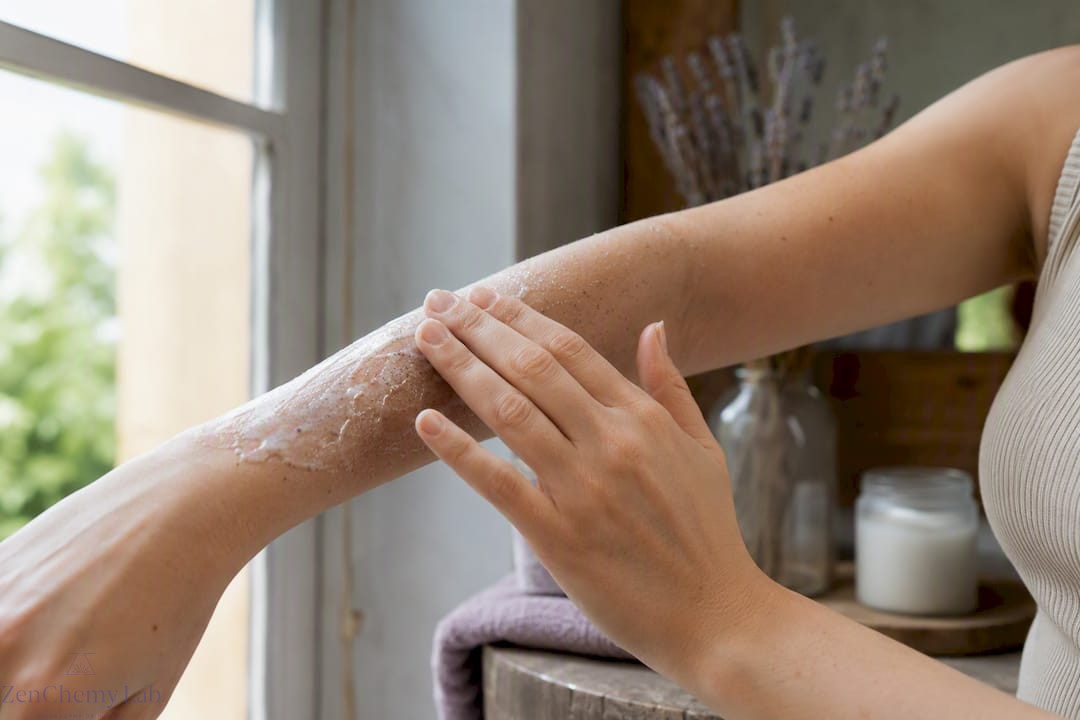
Yes: gentle keratosis pilaris exfoliation improves the look and feel of those rough little bumps for most people. The safest approach uses a chemical keratolytic like lactic or salicylic acid a few times weekly, always followed by a good moisturiser. Improvements build over weeks, not days, and there’s no permanent cure.
TL;DR:
- Chemical exfoliants like lactic and salicylic acid clear keratin plugs deeper in hair follicles, reducing bumps more effectively than physical scrubs.
- Use a patch test and apply exfoliants two to three times weekly, layering moisturizer immediately afterward to prevent irritation and dryness.
- Over-exfoliating causes redness, burning, or cracking, so adjust frequency based on skin response and take breaks during seasonal dryness.
- Gentle formulas with barrier-supporting ingredients like shea butter and botanical oils improve tolerance and reduce irritation risks.
- Seek a dermatologist if bumps worsen, spread, or develop signs of infection, or consider professional treatments for stubborn or inflamed cases.
Table of Contents
- Your quick-start checklist for keratosis pilaris exfoliation
- Chemical vs physical exfoliation: which works better for KP?
- How to exfoliate safely for keratosis pilaris, step by step
- Which active ingredients actually help keratosis pilaris?
- How do you know if you’re over-exfoliating?
- When should you see a dermatologist about KP?
- Zenchemylab’s take: gentle formulas, real follicles
- Bringing this routine into your skincare shelf
- Sources
Your quick-start checklist for keratosis pilaris exfoliation
Before you touch a single product, set up the conditions that make exfoliation work rather than backfire. Skip a step here and you’ll spend weeks fighting redness instead of smoothing bumps.
- Shower with warm (not hot) water, and use a mild, non-foaming cleanser to avoid stripping natural oils.
- Patch-test any new acid on your inner forearm for 24 hours before applying it to affected areas.
- Start with a chemical exfoliant two to three times a week, exactly as dermatological guidance recommends.
- Apply the keratolytic first, then seal it in with moisturiser while skin is still slightly damp.
- Skip loofahs, body brushes, and gritty scrubs. These are the fastest route to irritated, angrier-looking KP.
Once this routine feels automatic, you can fine-tune frequency based on how your skin responses.
Chemical vs physical exfoliation: which works better for KP?
Chemical exfoliants win for keratosis pilaris, and the reason comes down to mechanism. AHAs like lactic and glycolic acid dissolve the bonds holding dead skin cells together, while urea softens and hydrates the thickened patches. Salicylic acid, a BHA, cuts through oil and works its way into the follicle itself, which matters because KP bumps form when keratin plugs clog hair follicles rather than just sitting on the surface.
Physical scrubs only address the surface. They can’t reach the keratin plug causing the bump in the first place, and scrubbing too hard risks micro-tears that trigger more keratin production as your skin tries to protect itself. That’s the opposite of what you want.
This is exactly why dermatological guidance favours chemical keratolytics such as lactic, glycolic, or salicylic acid, or urea, over vigorous physical scrubbing. That said, a very soft wash cloth or konjac sponge used with light pressure can complement a chemical routine for some people, if used gently.
- Chemical exfoliants: dissolve keratin bonds, reach into the follicle, generally lower irritation risk.
- Physical exfoliants: smooth surface texture only, higher irritation risk, best used sparingly and gently if at all.
Pro Tip: If you love the ritual of a scrub, use it once a week at most, and choose one with fine, rounded particles rather than sharp or jagged ones.
How to exfoliate safely for keratosis pilaris, step by step
Following a set order matters more than most people realise. Applying products in the wrong sequence, or skipping the patch test, is how a good routine turns into a rash.
- Patch test first. Apply a small amount of your chosen acid to your inner forearm and wait 24 hours. Redness, burning, or swelling mean skip that product or dilute it further.
- Cleanse gently with a warm (not hot) shower and a mild, non-drying wash.
- Apply the leave-on keratolytic to affected areas, typically upper arms, thighs, or cheeks, while skin is still slightly damp.
- Wait two to three minutes for absorption before layering anything else.
- Moisturise immediately with a barrier-supportive cream to lock in hydration, since Mayo Clinic notes that acids can sting or inflame skin without proper follow-up care.
- Apply sunscreen the next morning if the treated area sees sun exposure, since AHAs increase photosensitivity.
- Start at two to three times weekly. If skin tolerates it well after two weeks with no redness or peeling, you can gradually increase frequency.
Stop immediately if you notice burning that lasts more than a few minutes, persistent redness, or cracking. Scale back before scaling up.
Which active ingredients actually help keratosis pilaris?
Not every acid suits every skin type, and matching the ingredient to your skin’s actual behaviour saves you from months of trial and error.
- Lactic acid is the gentlest AHA and doubles as a humectant, making it the go-to for dry, flaky KP since it exfoliates while helping skin retain moisture.
- Salicylic acid cuts through oil and debris, making it better suited to areas with mild plugging or slightly oilier skin.
- Urea hydrates and softens thicker, rougher patches, often used at 10 to 20 percent concentrations in over-the-counter creams.
- Glycolic acid exfoliates more aggressively than lactic acid and works well for tolerant skin, but it carries a higher irritation risk and should be introduced slowly.
- Topical retinoids are sometimes used for stubborn cases but require caution around sun exposure and pregnancy status; discuss with a clinician first.
Moisturiser choice matters just as much as the acid. Look for glycerin, ceramides, or petrolatum on the ingredient list, all barrier-supportive humectants and occlusives that keep water from escaping treated skin. Skipping this step isn’t just a missed opportunity. Follow-up moisturising prevents the dryness and compensatory keratin production that can actually make bumps worse.
How do you know if you’re over-exfoliating?
Consistency beats intensity every time with KP. A steady two to three sessions a week, sustained for months, outperforms an aggressive daily routine that burns out after two weeks.
Watch for these warning signs:
- Burning or stinging that lingers more than a few minutes after application.
- Redness that doesn’t fade within an hour.
- Cracking, flaking in sheets, or visible pain when you touch the area.
- Skin that feels tight or raw rather than smooth.
If you spot any of these, stepping down concentration or frequency is the right call rather than pushing through. Give your skin two to three days off actives, moisturise heavily, and reintroduce the acid at a lower frequency once things calm down.
Seasonal shifts matter too. Cold, dry winter air pulls moisture from skin faster, so you may need richer moisturisers for dry skin and slightly less frequent acid use in winter months, then can often tolerate more frequent exfoliation in humid summer conditions.
Pro Tip: Keep a simple log for two weeks, noting frequency, product, and how your skin looks the next morning. Patterns show up faster than you’d expect.
When should you see a dermatologist about KP?
Self-care handles most cases, but not all. If bumps stay inflamed, spread, or show signs of secondary infection like pus or increasing warmth, book an appointment rather than intensifying your home routine.
Clinicians sometimes prescribe stronger topical retinoids or keratolytics for stubborn cases, and options like chemical peels or certain lasers exist too. These remain cosmetic treatments with variable results, not cures, and outcomes differ significantly from person to person. Severe inflammation, pain, or bumps that worsen despite consistent gentle care are red flags worth a professional look.
Zenchemylab’s take: gentle formulas, real follicles
Here’s what gets lost in most keratosis pilaris advice: the acid matters less than what surrounds it. A 10 percent lactic acid serum in a harsh, alcohol-heavy base can irritate skin that would tolerate the same acid beautifully in a formula built around humectants and skin-identical lipids.
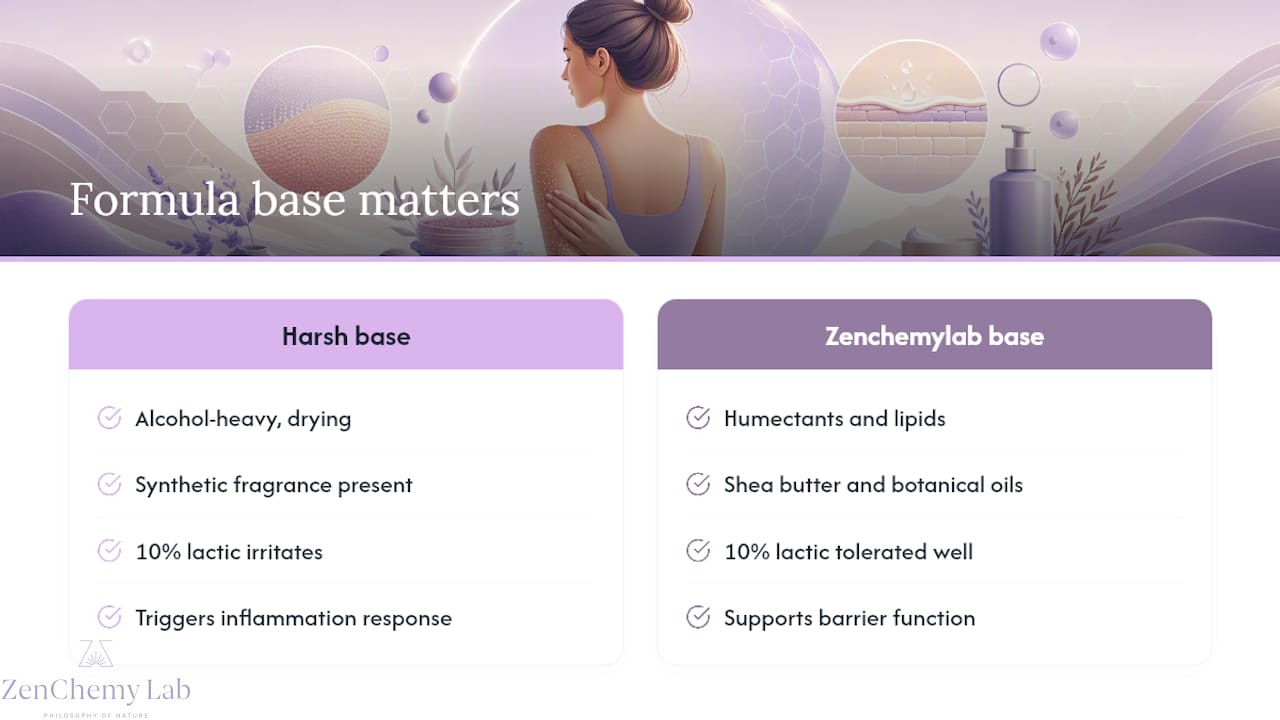
That’s the gap Zenchemylab’s approach to natural skincare tries to close. Handcrafted formulations built around ingredients like shea butter and botanical oils give the skin barrier real support while the acid does its work, rather than fighting against a formula full of drying alcohols or synthetic fragrance. When you’re choosing between products, check the ingredient list for what’s not there as much as what is. Fewer irritants means more room for the actual keratolytic to do its job without triggering a defensive, inflammatory response from your skin.
The bumps aren’t going anywhere overnight. But skin that’s well-supported between exfoliation sessions tolerates the process far better than skin left to fend for itself.
— Alex
Bringing this routine into your skincare shelf
If you’re piecing together a keratosis pilaris exfoliation routine, Zenchemylab’s product range is built for exactly this kind of gentle, consistent care rather than aggressive one-off treatments. The Lactic Acid + Hyaluronic Acid Renewing AHA Serum fits directly into the leave-on step of the routine outlined above, applied two to three times weekly on damp skin before moisturiser.
For cleansing without stripping your barrier, a non-drying wash like the Pine Tar Tallow Soap works well as your daily shower step, followed by a rich body cream from the Body Care collection to lock in moisture while skin is still damp. Together, these three steps cover cleanse, treat, and repair, the exact sequence dermatologists recommend, using formulas made with shea butter and botanical ingredients instead of synthetic fillers. Browse the full lineup and build your own version of this routine today.
Sources
- Keratosis pilaris: Treatment and self-care for this common skin condition – Harvard Health
- Keratosis pilaris – StatPearls – NCBI Bookshelf
- Keratosis pilaris – Diagnosis and treatment – Mayo Clinic
- Keratosis pilaris: Self-care – American Academy of Dermatology (AAD)
This article is general information, not a substitute for advice from a qualified doctor. Consult a qualified healthcare professional about your own circumstances before acting on anything here.

1 Comments