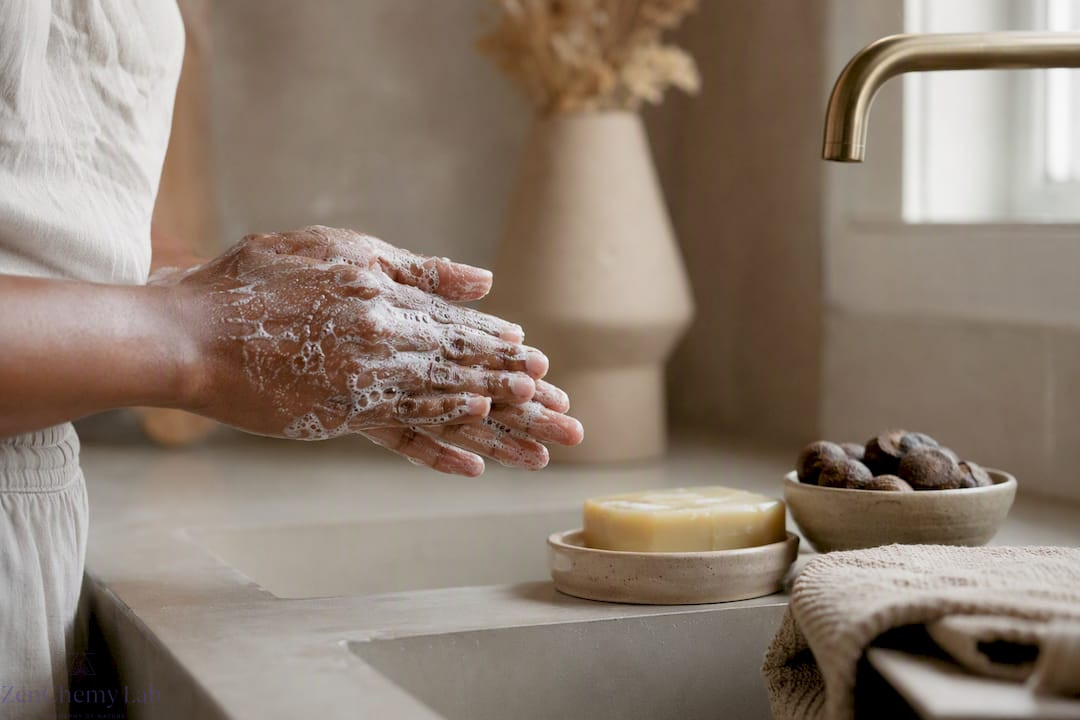
Yes: shea butter soap moisturizes deeply, calms inflamed or reactive skin, and delivers antioxidant protection through vitamins A and E, all while staying gentle enough for most sensitive skin types. That last part comes with a catch. The bar needs to be formulated well, with minimal fragrance and no harsh detergents, or you lose most of the benefit. Here’s what shea actually does for your skin, what the research says, how to pick a bar that delivers, and how to use it right.
- Moisturizing: fatty acids reinforce the skin barrier and cut moisture loss
- Soothing: cinnamic acid and triterpenes calm redness and irritation
- Antioxidant: vitamins A and E protect skin from everyday environmental stress
- Practical note: choose fragrance-free, mild formulas if you have sensitive or reactive skin
Key Takeaways
Shea butter soap works because its fatty acids and unsaponifiable content moisturize and calm skin, but only when the bar skips harsh detergents and heavy fragrance.
| Point | Details |
|---|---|
| Core benefits | Shea soap moisturizes, calms redness, and delivers antioxidant protection from vitamins A and E. |
| Formulation matters | Higher shea inclusion and cold-processing preserve more unsaponifiable vitamins and triterpenes. |
| Check the label | Choose bars listing shea butter early, and skip vague “fragrance” or sulfate-heavy formulas. |
| Use it right | Patch-test new bars, keep rinse times short, and store dry between uses to extend bar life. |
| Zenchemylab’s approach | Formulates shea-forward, fragrance-free bars with transparent labelling for sensitive daily use. |
Table of Contents
- Shea butter soap benefits for skin: moisture, calm, and antioxidant support
- How shea butter works in soap: composition and formulation effects
- Is shea butter soap good for sensitive, acne-prone, or daily face use?
- What the research says about shea butter soap
- How to choose a quality shea butter soap
- How to use and store your shea butter soap
- Why Zenchemylab builds around shea butter
- Try a shea-rich bar built for sensitive, everyday skin
- Sources
Shea butter soap benefits for skin: moisture, calm, and antioxidant support
Shea butter’s fatty acid profile is what makes this ingredient behave so differently from a standard detergent bar. Oleic and linoleic acids sit within the lipid layer of your skin, reinforcing the barrier that keeps water in and irritants out. That’s why washing with a shea-rich bar tends to leave less of that tight, stripped feeling than a typical soap.
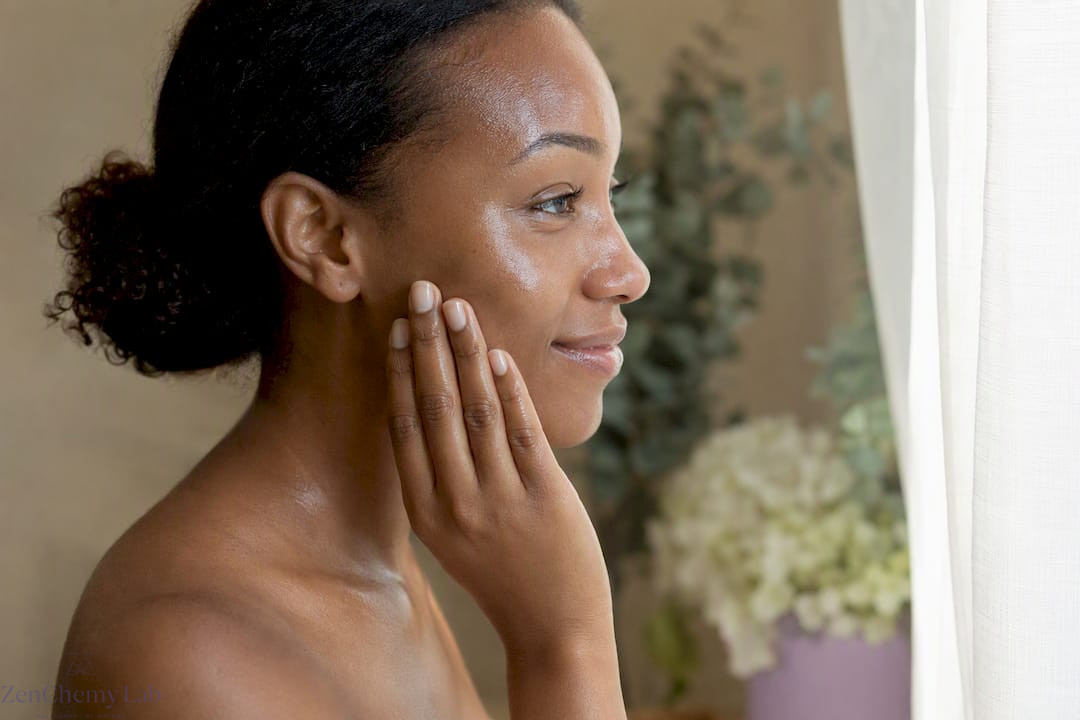
The calming effect isn’t just anecdotal. Shea butter contains cinnamic acid and plant compounds called triterpenes, both linked to reduced inflammation and redness, which is why it shows up so often in products aimed at eczema and psoriasis-prone skin. Add vitamins A and E, both antioxidants, and you get a bar that’s working on two fronts: protecting skin from free-radical stress while supporting the barrier that keeps it hydrated.
Four things stand out when you compare shea soap against a plain commercial bar:
- Less post-wash tightness. The lipid content coats skin instead of stripping it clean.
- A creamier, more conditioning lather rather than a thin, foamy one.
- Reduced visible redness for people prone to reactive or flushed skin.
- A longer-lasting bar, since higher fat content resists dissolving as quickly as lean, detergent-heavy soaps.
None of this means shea soap is a treatment for diagnosed skin conditions. It’s a daily-use product that happens to be built from ingredients dermatological research already associates with barrier support and calming benefits.
How shea butter works in soap: composition and formulation effects
Shea butter’s behaviour in a bar comes down to its fatty acid mix. Oleic acid keeps the bar conditioning, stearic acid adds hardness and a slower melt, and linoleic acid supports the skin’s own moisture retention. Soapmakers lean on this blend because it produces a bar that lathers richly without turning soft and mushy in the shower.
The other piece is unsaponifiable matter, the portion of shea butter that doesn’t convert to soap during the saponification reaction. This fraction holds onto the vitamins and triterpenes responsible for shea’s calming reputation, and shea butter carries a notably higher unsaponifiable content than many other vegetable oils used in soapmaking.
- Bars with 15 to 20% shea inclusion tend to feel noticeably more conditioning than lower-percentage formulations
- Refined shea loses some scent and colour during processing, which can also strip a portion of its unsaponifiable content
- Unrefined, cold-pressed shea retains more of its natural nutty aroma and pale ivory colour, along with more of those beneficial compounds
Pro Tip: Check whether a soap lists “shea butter” or the vaguer “butyrospermum parkii” high in the ingredient list. Position in that list roughly reflects concentration, so a bar listing shea third or fourth usually delivers more benefit than one where it trails behind a dozen other ingredients.
Is shea butter soap good for sensitive, acne-prone, or daily face use?
Most people can use shea butter soap daily on both face and body, provided the formula skips synthetic fragrance and aggressive surfactants. If you have never tried a particular bar, patch-test it on your inner forearm for 24 hours before using it on your face.
- For eczema-prone or reactive skin, look for fragrance-free, short-ingredient-list bars specifically marketed for sensitive skin. Zenchemylab’s eczema-friendly soap options are built around this kind of minimal formulation.
- For acne-prone skin, shea butter itself isn’t inherently comedogenic, but a heavy, oil-rich bar layered over already-oily skin can feel too rich for some people. Watch how your skin responds over a week rather than judging after one wash.
- For daily face use, a mild shea bar can replace a separate cleanser for many people, though those with very dry or mature skin often do better following up with a leave-on moisturizer or barrier cream to lock in what the soap just delivered.
- For body use, shea soap works well on rough patches like elbows, knees, and heels, where the conditioning lather has more time to work before rinsing.
What the research says about shea butter soap
A laboratory study published through CAJOST measured the physicochemical properties of formulated shea butter soap, including saponification and iodine values, and found antimicrobial activity against Staphylococcus aureus and Candida albicans at sufficient concentrations. That’s a meaningful signal for shea’s potential as a raw material in conditioned or medicated soap bases, though it’s lab-level evidence, not a substitute for treating a diagnosed skin condition.
Formulated shea butter soap demonstrated measurable antimicrobial activity against common skin-associated organisms while retaining favourable physicochemical soap properties, supporting its use as a nourishing base for conditioned bar soap.
Health Canada’s guidance on cosmetic ingredient safety reinforces the practical side of this: transparent labelling matters, and a mild, well-formulated shea bar is generally considered appropriate for daily use. Zenchemylab’s own formulation notes on choosing soap ingredients echo the same principle, prioritizing recognizable, minimally processed inputs over long synthetic ingredient decks.
How to choose a quality shea butter soap
Reading a soap label takes about ten seconds once you know what to look for. Ingredients are listed by concentration, so where shea sits on that list tells you almost everything.
- Look for “shea butter” named directly and positioned in the first half of the ingredient list, not buried near the end
- Skip bars that lean on sodium lauryl sulfate or similarly harsh detergents as the primary cleansing agent
- Favour fragrance-free or dermatologically tested lines if you have sensitive or reactive skin
- Treat vague terms like “butters” or unspecified “fragrance” as a red flag, since you can’t verify what’s actually in the bar
- Be wary of any product that won’t disclose a full ingredient list at all
Pro Tip: Cold-processed, artisan bars typically retain more of shea’s unsaponifiable matter than mass-produced, heavily refined ones, since gentler processing preserves more of the original vitamin and triterpene content. Zenchemylab’s handmade soap collection is built around that same cold-process philosophy.
How to use and store your shea butter soap
Getting the most from a shea bar comes down to a few small habits.
- Lather gently with wet hands or a soft washcloth rather than scrubbing directly, which preserves the bar and avoids over-stripping skin.
- Keep rinse times short. A quick, thorough rinse is enough; prolonged washing under hot water can undo some of the barrier benefit.
- Store the bar dry on a draining soap dish between uses, since sitting in water softens it and shortens its lifespan.
- Patch-test new bars on your forearm for a day before full use, and discontinue if you notice persistent redness or itching.
- Follow with a light moisturizer or balm if your skin runs dry, especially in colder months.
Why Zenchemylab builds around shea butter
Alex here. Formulating with shea butter rather than cheaper filler oils costs more, but it’s the difference between a bar that just cleans and one that actually leaves skin better than it found it. Zenchemylab sources shea with transparency in mind, listing it clearly and early on every label rather than hiding it behind vague “butter blend” language. If you want to see how that shows up across a full skincare routine, ZenChemy Lab’s ingredient guide breaks down the reasoning further.
— Alex
Try a shea-rich bar built for sensitive, everyday skin
Between synthetic detergent bars and thin liquid cleansers, there aren’t many options that combine real moisturizing power with a fragrance-free approach suited to reactive skin. Zenchemylab’s shea-based bars are formulated exactly the way this article recommends: shea listed high on the ingredient panel, no harsh sulfates, and minimal additives so the fatty acids and antioxidants actually reach your skin instead of getting diluted by filler.

If daily tightness or occasional redness has you rethinking your bar soap, browse Zenchemylab’s natural skin collection and pick a formula that matches your skin’s needs, whether that’s a fragrance-free option for sensitive skin or a richer bar for dry winter months. Add it to your next order and give it two weeks before judging the difference.
Sources
- Health Canada — safety of cosmetics and ingredient labelling
- Pascoe herbal health care — shea butter for skin
- RusticWise — 10 brilliant benefits of shea butter in soap