There’s no single best body oil for massage. Jojoba suits sensitive or acne‑prone skin, sweet almond works well as an everyday full‑body option, fractionated coconut glides best for deep tissue work, and grapeseed absorbs fast for lighter relaxation strokes. Your decision comes down to four factors: your skin type, the massage style you’re doing, any allergy risk, and how much scent you actually want on your skin.
TL;DR:
- Choosing the right body oil depends on skin type, massage goal, allergen sensitivity, and scent preference, impacting glide, grip, and absorption.
- Jojoba and grapeseed oils are lower risk options for those with nut allergies, while sweet almond and macadamia oils pose higher nut allergy risks.
- Lighter oils like grapeseed suit relaxation, while heavier oils like avocado and macadamia work better for dry or mature skin requiring more slip.
- Store oils in a cool, dark place with tight seals and dark glass bottles, and use within 6 to 12 months to prevent oxidation and rancidity.
- Patch testing essential oils before full use is crucial, especially for pregnant clients and children, due to potency and sensitivity concerns.
Table of Contents
- What are the common carrier oils used for body oil massage?
- How do you choose the right massage oil?
- How do you use body oil safely for the best results?
- Which oil matches your massage goal?
- Why choose transparent, natural formulations?
- How do you store massage oil to keep it fresh?
- Making body oil part of your everyday routine
- Zenchemylab: a natural option for massage and body oils
- Sources
What are the common carrier oils used for body oil massage?
Not every oil behaves the same way on skin, and picking one without understanding texture is how people end up with a greasy towel and a disappointed client (or partner). Here’s what actually matters when you read a label.
Sweet almond oil is the industry default for good reason: medium viscosity, moderate glide, and a mild nutty scent most people tolerate well. It’s a solid all‑rounder for full‑body relaxation work.
Jojoba oil isn’t technically an oil at all. It’s a liquid wax that mimics skin’s natural sebum, which makes it a favourite for sensitive or acne‑prone skin. It absorbs slower than almond, giving longer working time before you need to reapply.
Fractionated coconut oil is the clinic standard for deep tissue and sports massage. It’s lightweight, non‑greasy, and stays liquid at room temperature, unlike regular coconut oil, which solidifies below roughly 24°C. Therapists lean on it because it won’t stain linens the way heavier oils can, and it holds up on the shelf without turning rancid quickly.
Grapeseed oil absorbs fastest of the bunch, which makes it ideal for shorter relaxation sessions or clients who dislike a heavy, oily finish.
Avocado and macadamia oils run thicker and richer, better suited to very dry or mature skin that needs more slip retained over a longer massage.
Castor oil is thick and sticky on its own but works as a small addition to boost grip for deeper pressure techniques.
A few allergy notes worth flagging before you buy:
- Sweet almond, macadamia, and any oil pressed from tree nuts carries a nut allergy risk, even in trace amounts.
- Fractionated coconut is generally well tolerated but can still trigger reactions in people with coconut sensitivities.
- Jojoba and grapeseed are considered lower‑risk options for people avoiding nut‑derived carriers.
Pro Tip: Check the ingredient list for “hydrogenated” or “partially hydrogenated” coconut oil. That’s a different product from fractionated coconut oil and behaves nothing like it on skin.
Therapists evaluate oils on three axes: slip, grip, and absorption. Effleurage strokes need long glide, while deeper technique work benefits from a bit more grip so hands don’t slide off the target muscle, a distinction massage therapists rely on when choosing between products.
How do you choose the right massage oil?
Buying a massage oil online or off a shelf is easy to get wrong if you’re shopping on scent alone. Work through these steps instead.
- Identify your skin type first. Dry or mature skin wants avocado, macadamia, or sweet almond. Oily or acne‑prone skin does better with jojoba or grapeseed.
- Match viscosity to massage goal. Deep tissue and sports work call for a lighter oil like fractionated coconut so your hands maintain contact and control. Slow, relaxation‑focused strokes tolerate a thicker oil.
- Check the allergen list. Scan for tree nut derivatives if you or your client has a known sensitivity.
- Verify sourcing claims. Look for “cold‑pressed” or “unrefined” on the label; those processing methods retain more of the oil’s natural fatty acids and reduce the additives sometimes found in refined versions.
- Compare price per millilitre, not per bottle. A 200 ml bottle at $18 beats a 100 ml bottle at $12 on a per‑use basis, and massage oil gets used generously.
- Smell before you commit to a scented version. Fragrance oils used at full‑body scale can overwhelm a room fast; unscented or lightly scented options travel better across repeat sessions.
Red flags to walk away from: vague ingredient lists that just say “massage oil blend” with no botanical names listed, unusually low prices on oils marketed as cold‑pressed, and bottles with no harvest or expiry date printed anywhere.
How do you use body oil safely for the best results?
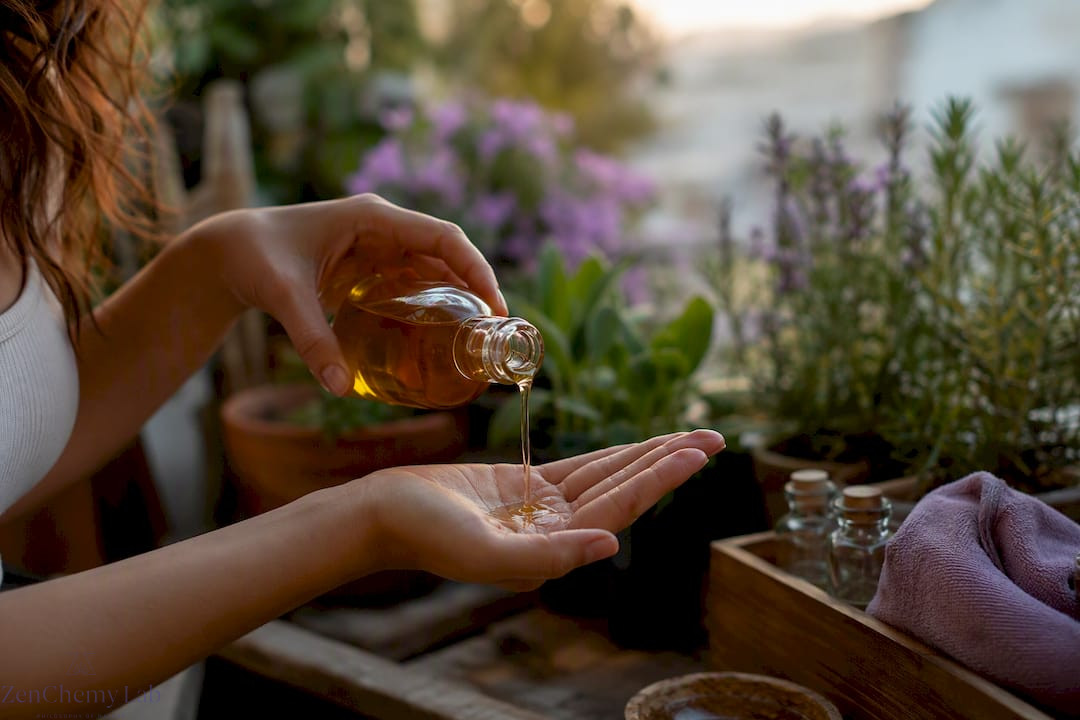
Warm the oil in your palms for a few seconds before applying. Cold oil straight from the bottle is uncomfortable on bare skin and doesn’t spread as evenly. Start with a nickel‑sized amount for one limb section and add more as needed rather than pouring generously up front. Most people overestimate how much they need; a full back rarely needs more than a tablespoon.
If you’re adding essential oils to a carrier for extra benefit, dilution matters more than most people assume. A safe general ratio for adults is a few drops of essential oil per teaspoon of carrier oil, since essential oils are potent and unregulated for purity by the FDA, which means concentration and quality vary between brands.
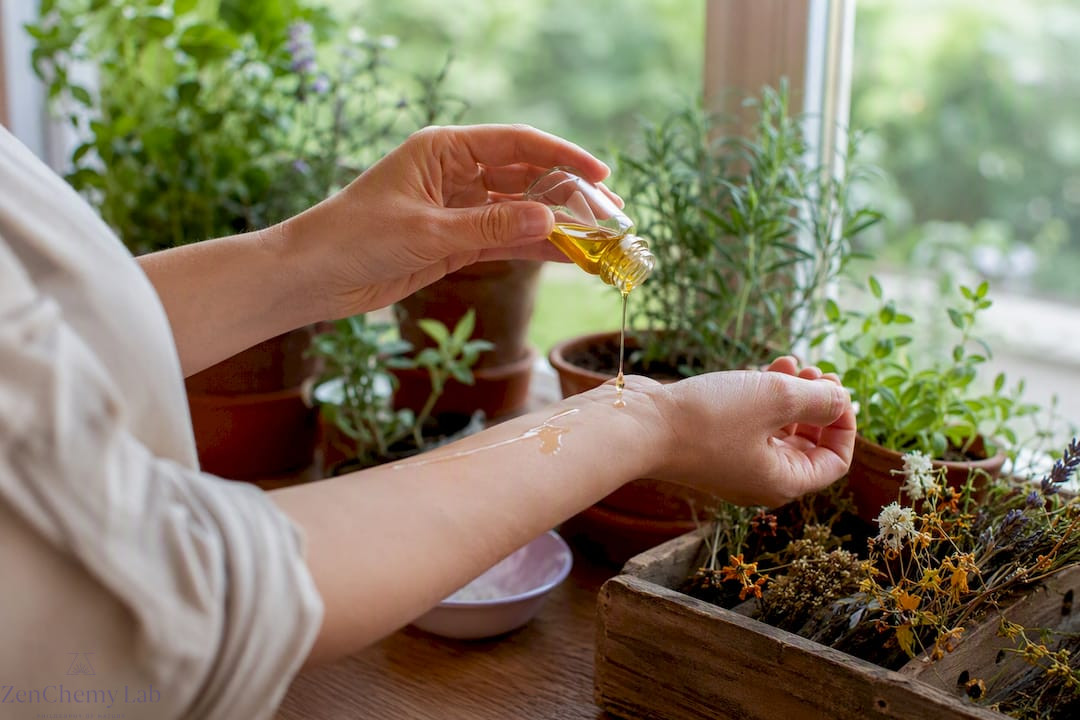
Before your first full application, do a patch test: apply a small amount to your inner forearm and wait 24 hours to check for redness, itching, or irritation.
A few safety notes worth keeping in mind:
- Pregnant clients should avoid certain essential oils entirely; check with a healthcare provider before adding anything beyond a plain carrier oil.
- Skip essential oils on children under 2, and dilute far more conservatively for older kids.
- Oil stains on linens respond best to a pre‑treat with dish soap before washing, since standard laundry detergent alone often isn’t enough to break down the residue.
- If skin irritation, persistent redness, or a rash develops, stop use and speak with a dermatologist rather than trying to self‑treat.
Which oil matches your massage goal?
Different goals call for different formulations, and the right combination changes the outcome more than the base oil alone.
- Relaxation: a light carrier such as grapeseed or sweet almond, paired with a few drops of lavender essential oil, keeps the experience calming without overwhelming the senses.
- Sore muscles: look for blends featuring arnica or a thicker carrier base; arnica and vitamin E are commonly called out by therapists as ingredients that support muscle recovery and skin repair after intense activity.
- Dry skin: avocado, macadamia, or sweet almond bring higher fatty‑acid content that sits on skin longer and supports hydration after the massage ends.
- Intimate use: stick to fragrance‑free, skin‑safe formulations without added essential oils, since mucous membranes are far more sensitive than regular skin and many fragrance compounds cause irritation there.
Commercial multi‑use oils often blend several carriers, jojoba with fractionated coconut and a touch of castor, for example, to balance glide with absorption in one bottle. That layered approach is common across the market and worth understanding even if you eventually build your own combination from single oils.
Why choose transparent, natural formulations?
Ingredient transparency isn’t a marketing nicety. It’s how you actually know what’s touching your skin for 30, 60, or 90 minutes at a stretch. Zenchemylab lists full ingredient panels on every massage oil and body oil product page, with cold‑pressed carriers named rather than buried under “fragrance blend.”
Rely on evidence and expert guidance when working with essential oils. Dilution and professional consultation matter because these oils are potent, not decorative additions.
That’s the standard certified aromatherapists apply, and it’s the same standard worth holding any bottle on your shelf to.
How do you store massage oil to keep it fresh?
Carrier oils oxidize. It happens slowly, but heat, light, and air all speed up the process, and rancid oil smells slightly sour and feels tackier than fresh product. That’s your first sign to toss a bottle, even before an expiry date.
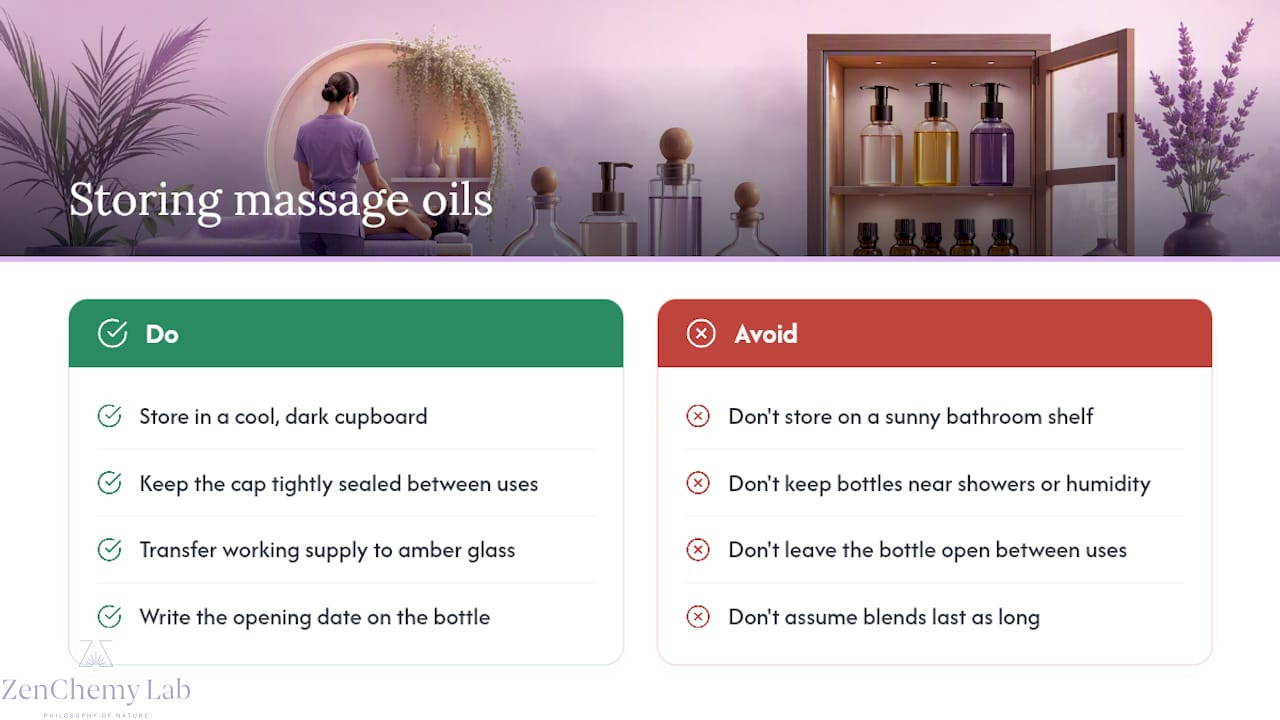
Store your oils in a cool, dark cupboard rather than a sunny bathroom shelf. Bathroom humidity and temperature swings from hot showers accelerate breakdown faster than most people expect. A linen closet or bedroom drawer works better than the spot right next to your shower.
Keep the cap tightly sealed between uses. Every time you leave a bottle open, you’re introducing oxygen that speeds up oxidation. If your bottle came with a pump or dropper top, that’s actually a shelf‑life advantage over an open‑pour cap, since it limits air exposure with each use.
Dark glass bottles protect against light degradation better than clear plastic. If your oil came in clear packaging, consider transferring a working supply into a small amber glass bottle and keeping the bulk stock in a dark cupboard.
Most single‑carrier oils last 6 to 12 months once opened, though fractionated coconut holds up longer than most thanks to its molecular structure. Blends with added essential oils typically have a shorter usable window since the essential oil components can degrade faster than the carrier base. Write the opening date on the bottle with a marker; it’s a small habit that saves you from guessing later.
Making body oil part of your everyday routine
The best massage oil isn’t the fanciest one. It’s the one you’ll actually reach for after a shower without thinking twice. Start with one versatile carrier, check the label for cold‑pressed sourcing and a clear ingredient list, and note the shelf life before buying. Then test it for two weeks and adjust: swap oils, try a scent, dilute differently. Skin care rewards patience over perfection.
— Alex
Zenchemylab: a natural option for massage and body oils
If you’ve read this far, you already know the difference between a bottle that lists “fragrance blend” and one that names its cold‑pressed carrier oils outright. Zenchemylab builds every massage and body oil around that second approach: transparent ingredient lists, small‑batch formulation, and carriers chosen for skin feel rather than shelf appeal alone.

Browse the massage oil collection to compare textures side by side, and check the natural skin ingredient tags if you’re narrowing down by skin type. For scent pairing ideas that complement a massage session without overwhelming a room, the home fragrance guidance from Wick & Glow is worth a look before you buy anything scented. Start with one bottle, run your own patch test, and see how it performs on your skin before committing to a full routine.
Sources
- What are essential oils? — Healthline
- The 11 best massage oils, approved by massage therapists — Byrdie