Wash your hair first, apply conditioner and leave it in while you exfoliate or shave, wash your body next, wash your face last, then rinse cooler, pat dry, and moisturize while your skin is still damp. That sequence isn’t arbitrary. Dermatologists point to it because shampoo and conditioner runoff can clog pores on your chest, back, and face if you cleanse your face too early, and because skin that’s shaved or exfoliated first responds better to the products layered on afterward.
Here’s the routine broken down, with the reasoning behind each step:
- Wash hair with shampoo (1 to 2 minutes) — clears scalp oil and product buildup before it can drip onto skin below.
- Apply conditioner or a hair mask and let it sit (2 to 5 minutes) — this dwell time is when the treatment does its work, and it overlaps neatly with your next steps.
- Exfoliate, 1 to 2 times a week (1 to 2 minutes) — sloughs dead skin so shaving and moisturizer both perform better.
- Shave, if you’re shaving (3 to 5 minutes) — skin is warm, soaked, and softened by now, which means less drag and fewer nicks.
- Wash your body (2 to 3 minutes) — top to bottom, saving intimate areas for last.
- Wash your face last (1 minute) — by now all the hair and body runoff is gone, so your pores aren’t catching anything they shouldn’t.
- Final rinse, water turned cooler (30 seconds to 1 minute) — helps the hair cuticle lie flatter and rinses away any last residue.
- Pat dry, don’t rub (1 minute) — protects freshly shaved or exfoliated skin from friction.
- Moisturize while skin is still damp (2 minutes) — locks in water before it evaporates off bare skin.
A quick daily shower following just the core steps takes about 5 to 10 minutes. The full version, with a mask, exfoliation, and shave all in one go, is what’s known online as the “everything shower,” and it’s genuinely meant to be a once-a-week ritual, not a daily habit, running anywhere from 30 to 90 minutes depending on how many treatments you stack in.
Key Takeaways
Following the correct shower routine order, hair first, face last, and moisturizer applied to damp skin, protects both your skin barrier and your scalp from avoidable irritation.
| Point | Details |
|---|---|
| Wash hair before anything else | Shampoo and conditioner runoff can clog pores if body and face are washed first. |
| Exfoliate sparingly | Limit exfoliation to 1 to 2 times a week to avoid damaging the skin barrier. |
| Shave after a warm soak | Soaked, softened skin reduces razor burn and ingrown hairs. |
| Save your face for last | Washing your face last avoids contact with hair and body product runoff. |
| Pat dry, moisturize while damp | Rubbing irritates freshly shaved skin; damp application locks in hydration. |
| Reserve the full routine for once a week | An everything shower with every treatment included works best as a weekly ritual, not a daily one. |
| Match products to your skin type | Zenchemylab’s gentle soaps and body creams fit the body wash and post-shower moisturizing steps in this routine. |
Table of Contents
- What to do before you turn on the water
- Why hair care comes first in your shower routine order
- How often should you exfoliate, and when should you shave?
- How to wash your body the right way
- When should you wash your face in the shower?
- What water temperature and shower length actually protect your skin?
- What should you do in the minutes right after showering?
- What shower mistakes undo good skin habits?
- How do you choose shower products for your skin and hair type?
- How can you protect your hair and skin from hard water and heat damage?
- What I’ve learned about actually sticking to an everything shower
- Bringing natural products into your shower routine order
- Sources
What to do before you turn on the water
A good shower routine order actually starts outside the shower. The few minutes you spend prepping determine whether your treatments get the contact time they need, or whether you’re rinsing off a hair mask thirty seconds after applying it because you forgot to set a timer.
Dry brushing, if you use it, happens on completely dry skin before you ever step in. It’s meant to slough surface flakes and boost circulation, and doing it once the skin is wet just doesn’t work the same way; wet brushing tends to drag and irritate rather than exfoliate cleanly. If your hair mask or oil treatment calls for a pre-wash application, that’s also a “before” step. Many masks are formulated to sit on dry or slightly damp hair for 15 to 30 minutes before you ever get under the water, which is a very different dwell time than an in-shower conditioner.
Before you start, run through this quick checklist:
- Detangle hair if it’s prone to knots, so wet detangling later is gentler.
- Set your towel or robe within reach so you’re not dripping across the bathroom hunting for it.
- Test the water temperature at your wrist, aiming for warm, not scalding.
- Lay out your cleanser, razor, and conditioner so you’re not stalling mid-shower.
Pro Tip: If your hair mask says “apply to dry hair before shampooing,” respect that instruction. Applying it in the shower on soaking wet hair dilutes the formula and cuts its effective dwell time roughly in half.
Why hair care comes first in your shower routine order
Washing your hair before anything else isn’t a style preference. It’s the step that protects everything downstream. Dermatologists explain that shampoo and conditioner residue, left to drip over your shoulders, back, and chest, is a common trigger for body breakouts, because those products often contain silicones and surfactants your skin doesn’t need. Get your hair washed and rinsed first, and that risk disappears before you even reach for a body wash.

Technique matters here. Focus shampoo on the scalp itself rather than dragging it down the full length of your hair; the scalp is where oil and buildup actually accumulate. Use enough product to work up a light lather, which for shoulder-length hair is usually a coin-sized amount, and rinse until the water runs clear.
Conditioner or a mask goes on after shampoo, concentrated from mid-length to ends where hair tends to be driest. If you’re planning to exfoliate or shave in the same shower, this is your moment: clip your hair up, let the conditioner sit, and move on to the next step while it works. When you’re ready to rinse it out, switch the water to cool or lukewarm rather than hot. A cooler rinse helps the hair cuticle lie flatter, which shows up as smoother, shinier strands once you towel off.
One distinction worth keeping straight: a pre-shower mask is applied dry and rinsed out once you’re under the water, while an in-shower mask goes on after shampoo and needs its full sit time before rinsing. Read your product’s label rather than assuming.
How often should you exfoliate, and when should you shave?
Exfoliation and shaving work best in that order, and both work best only a few times a week, not daily.

Dermatologists generally recommend exfoliating one to two times a week, less often if you have sensitive or reactive skin. If you’re exfoliating and shaving in the same session, exfoliate first. Removing dead skin cells clears the path for your razor, which means less tugging, fewer missed hairs, and typically a closer result with less irritation.
On method, chemical exfoliants like AHAs (glycolic or lactic acid) and BHAs (salicylic acid) tend to be gentler on the skin barrier than physical scrubbing, especially for the face. If you prefer a physical exfoliant, choose one with fine, rounded particles and use light pressure. What you want to avoid is an aggressive loofah scrubbed hard enough to leave your skin pink and stinging; that kind of abrasion damages the skin barrier rather than refining it. Zenchemylab’s body scrub ritual checklist breaks down which exfoliation method suits which skin type if you want to match technique to your own skin more precisely.
Shaving comes after exfoliation, and ideally after several minutes of warm water exposure, whether that’s from a bath soak or simply standing under the shower.
Warm water soaking softens the hair follicle and the surrounding skin, which reduces the friction that causes razor burn and ingrown hairs. A sharp, clean blade matters just as much as the soak time. A dull or rusty razor drags instead of cutting cleanly, and that drag is what tears at softened skin.
Replace disposable razors regularly as needed based on wear and performance, sooner if you notice tugging, and rinse the blade between passes to keep it from clogging with hair and product.
How to wash your body the right way
Once hair and any shaving or exfoliating are done, it’s time for the body wash step, and the order here follows a simple logic: work from cleanest and least exposed to most exposed.
- Start at the neck and shoulders, then move to chest and back.
- Wash arms next, then stomach.
- Move down to legs and feet.
- Finish with intimate areas, washed externally only.
This top-down sweep isn’t just about coverage. It also means you’re not re-contaminating already-clean skin by working backward.
On tools: hands or a soft washcloth are the better choice for most people, particularly anyone with sensitive or eczema-prone skin. Loofahs and mesh puffs can trap bacteria and dead skin in their fibres between uses, and reusing a damp, unwashed loofah day after day is one of the more common hygiene oversights in a shower routine. If you do use one, rinse it thoroughly and let it dry fully between showers, and replace it every three to four weeks.

Soap choice matters too. Fragrance-free, gentle formulas cause the least reactivity for sensitive skin, whether you reach for a bar or a liquid cleanser. Zenchemylab’s guide to gentle cleansing methods covers how to pick between cloth, hands, and mild ingredients depending on what your skin tolerates.
When should you wash your face in the shower?
Your face gets washed last, after hair and body, and there’s a clear reason for that placement: by the time you reach your face, every trace of shampoo, conditioner, and body wash runoff is already down the drain instead of sitting on your skin.
If you wear makeup, sunscreen, or heavier product during the day, a double cleanse is worth building in. Start with an oil-based cleanser to break down makeup and SPF, massage it in, rinse, then follow with a water-based cleanser to clear away what’s left and refresh the skin. If your face is bare, a single gentle cleanse is enough.
Match the cleanser to your skin type rather than grabbing whatever’s already in the shower:
- Dry or sensitive skin does better with a cream or gel cleanser that doesn’t strip natural oils.
- Oily or acne-prone skin can usually tolerate a light foaming cleanser without over-drying.
- Avoid physical scrubs on facial skin altogether; it’s thinner and more reactive than body skin, and abrasive tools there tend to backfire, increasing irritation rather than improving texture.
What water temperature and shower length actually protect your skin?
Lukewarm water is the setting to aim for, and it’s not a minor detail. Hot water strips natural oils faster than warm water does, which leaves skin drier and can flare conditions like eczema or already-sensitive skin. Healthline’s guidance backs a warm, not hot, temperature setting as the default for daily showers.
Time in the shower matters just as much as temperature. For a standard daily routine, 5 to 10 minutes is the range most guidance points to, enough to cleanse thoroughly without over-soaking skin that’s already lost some of its natural barrier to soap and water. An everything shower, with its exfoliation, shave, and mask dwell time, understandably runs longer, but that’s exactly why it’s reserved for once a week rather than folded into your daily habit.
A final cooler rinse before you step out does double duty. It helps hair cuticles lie flatter for a smoother finish, and it takes the edge off a hot shower’s drying effect on skin, leaving you feeling a bit more refreshed on the way out.
What should you do in the minutes right after showering?
The few minutes after you turn off the water matter more than most people realize, and getting them right is what separates skin that stays hydrated from skin that feels tight an hour later.
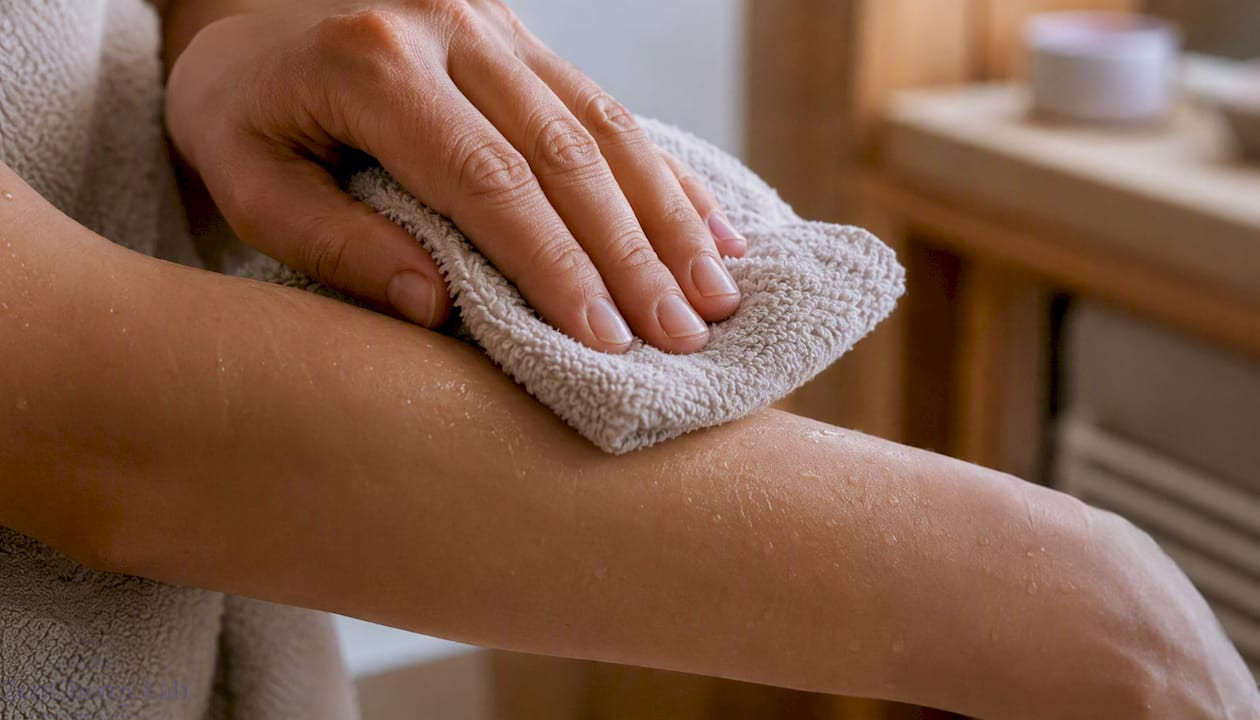
Towel technique comes first. Pat, don’t rub, especially over skin you’ve just shaved or exfoliated; rubbing creates friction on skin that’s already slightly more vulnerable than usual. A microfiber towel is gentler on both skin and hair than a standard terry towel, and it also cuts down on frizz if you blot hair with it instead of twisting and scrubbing.
Moisturizer goes on next, and timing is everything — check out this morning skincare routine checklist for tips on layering products effectively. Applying it to skin that’s still slightly damp helps trap the water already on your skin’s surface rather than letting it evaporate into the air. Wait too long after towelling off, and you’re moisturizing drier skin that’s already lost that surface water. For sensitive skin, unscented and alcohol-free formulations reduce the odds of stinging on freshly shaved or exfoliated areas.
Hair finishing follows the same damp-not-wet logic. Blot excess water with your microfiber towel, apply a leave-in conditioner or heat protectant if that’s part of your routine, and detangle gently with a wide-tooth comb starting at the ends and working up, rather than yanking through knots from the root.
Pro Tip: Keep your moisturizer within arm’s reach of where you towel off. If you have to walk to another room to find it, you’ve likely already lost the damp window that makes it work best.
What shower mistakes undo good skin habits?
Even a well-ordered routine can backfire if a few habits creep in. The most common ones show up again and again in dermatology guidance:
- Exfoliating daily instead of the recommended one to two times a week, which wears down the skin barrier over time.
- Long, hot showers that feel relaxing but strip away natural oils your skin needs.
- Reaching for an abrasive loofah or scrub brush out of habit rather than switching to hands or a soft cloth.
- Washing your face at the start of the shower, before hair and body runoff has cleared.
- Shaving on dry or barely-wet skin instead of giving it a proper warm soak first.
Dermatologists caution that habitual abrasive scrubbing doesn’t just fail to improve skin, it actively increases irritation and can harbour bacteria in tools like loofahs and washcloths that aren’t dried and replaced often enough. The fix isn’t more scrubbing. It’s gentler tools, lower frequency, and a cleanser suited to your actual skin type.
The corrective is simple to state, even if it takes a little discipline to stick to: dial back exfoliation frequency, swap the loofah for hands or a soft cloth, and replace your razor before it starts dragging.
How do you choose shower products for your skin and hair type?
Reading an ingredient label is a faster way to judge a cleanser than reading its marketing copy. For body and face washes, look for glycerin and ceramides, both humectant and barrier-supporting ingredients that help skin hold onto moisture rather than lose it during cleansing. For sensitive skin, steer away from harsh sulfates like sodium lauryl sulfate and from denatured alcohol, both of which can strip and dry already-reactive skin.
Texture should match your skin and hair type, not just your preference. Oily skin often does better with a lighter, gel-based cleanser, while dry or mature skin benefits from a creamier formula with more emollients. Curly and textured hair tends to need richer conditioners with more slip, since curl patterns lose moisture faster along the hair shaft than straight hair does.
This is where Zenchemylab’s approach lines up naturally with the routine: the artisan soap collection is built around gentle, non-stripping ingredient bases suited to the body wash step, while richer body creams and facial oils fit the post-shower moisturizing window. If you want the ingredient-level detail behind why certain bases work better for certain skin types, the soap ingredient breakdown walks through it.
Pro Tip: If your skin reacts to a new cleanser within the first two uses, stop using it before your next shower rather than pushing through. Sensitized skin needs a few product-free days to recover, not more product.
How can you protect your hair and skin from hard water and heat damage?
Water exposure itself is a variable most routines overlook. If your home has hard water, high in dissolved minerals, it can leave a residue on both hair and skin that makes cleansers feel less effective and hair feel duller over time. A shower filter attached to the showerhead is a practical fix, reducing mineral buildup and, in some cases, chlorine exposure that can dry out both skin and hair.
Heat is the other exposure worth managing deliberately. Long, hot showers do more than just feel good in the moment; they accelerate water loss from the outer skin layer, which is part of why the lukewarm recommendation keeps coming up. The same principle applies after you’re out of the shower: air-drying hair fully before bed, or using a low heat setting if you blow-dry, reduces cumulative heat stress on the hair shaft compared to daily high-heat drying.
If you swim regularly or shower more than once a day, that’s added water exposure your hair and skin have to recover from each time, and it’s worth compensating with a slightly richer conditioner or an added leave-in oil rather than assuming your regular routine will keep up.
What I’ve learned about actually sticking to an everything shower
The “everything shower” sounds great in theory and falls apart in practice for most people, because a 60 to 90 minute routine simply doesn’t survive contact with a Tuesday morning. What made it sustainable, in my experience talking through routines with readers over the years, wasn’t discipline. It was removing every point of friction that made the long version feel like a chore.
The single biggest change is picking one consistent day and keeping every product for that routine in one spot, a small caddy or shelf, rather than scattered across the shower and bathroom cabinet. When the exfoliant, razor, mask, and moisturizer are all in reach at once, the routine stops requiring decisions and just becomes a sequence you move through. The second change is setting a timer or a playlist length you know matches the routine, so the mask’s dwell time isn’t guesswork and you’re not standing under running water “waiting it out” longer than necessary. Neither change is glamorous, but together they’re the difference between a ritual you do once and a habit you actually keep for months.
Bringing natural products into your shower routine order
Once you’ve got the sequence down, the products you use at each step start to matter just as much as the order itself. A gentle, fragrance-free bar cleanser suits the body wash step for most skin types, while a richer body cream or facial oil applied right after towelling off does the real work of locking in hydration during that critical damp window.

Zenchemylab’s handcrafted soaps and body creams are formulated around exactly this kind of gentle, ingredient-conscious use, cold-processed rather than mass-produced, and free of the harsh sulfates and synthetic fragrances that tend to aggravate sensitive skin during a long routine. If you’re putting together a full everything-shower kit, the natural skin category page is a practical place to browse soap, scrub, and moisturizer options that pair well together, and the essential natural skincare routine guide walks through how to build a starter set suited to your skin type. Browse the collection and put together your own weekly shower kit before your next everything-shower day.
Sources
- Yes, There Is a Correct Order for Everything You Do in the Shower | Allure
- How to shave while bathing | Gillette Venus
- The Best Shower Routine for Healthy Skin, According to a Dermatologist | Jefferson Health
- How to shower | Healthline
- Hidden risks of excessive face washing | EM Clinic
- Is your shower order sabotaging your skin? Here’s the routine dermatologists recommend | RealSimple