

TL;DR:
- Microplastic-free skincare products exclude intentionally added synthetic polymer microparticles to protect environmental and skin health. Regulatory definitions are evolving, with the EU and UK setting the most comprehensive standards, especially for rinse-off products, while leave-on formulations remain less regulated. Choosing certified, clearly labeled products and natural alternatives helps consumers reduce microplastic exposure and support sustainable beauty practices.
Microplastic-free skincare is defined as products formulated without intentionally added synthetic polymer microparticles, including microbeads, film-forming polymers, and other plastic-derived particles that persist in the environment and may affect skin health. Regulatory bodies like the EU and UK have moved to restrict these ingredients under frameworks such as EU Regulation 1223/2009, which sets particle size and composition thresholds for cosmetics. Third-party certification programmes like NATRUE now offer consumers a reliable way to verify that a product genuinely excludes these particles. Understanding what is microplastic free skincare matters because the concern extends beyond personal health. Every rinse-off product you use sends water down the drain, and synthetic microparticles that survive wastewater treatment accumulate in aquatic ecosystems.
What are microplastics and microbeads in skincare?
Microbeads are small, solid plastic particles, typically made from polyethylene or polypropylene, that were widely used in exfoliating scrubs and cleansers from the 1990s onward. Their appeal was practical: they provided consistent texture, gentle abrasion, and a smooth skin feel without the variability of natural exfoliants like walnut shell or sugar. The problem is that they are too small to be captured by most wastewater treatment systems and flow directly into rivers, lakes, and oceans.
The term “microplastics in skincare” now covers a much broader category than microbeads alone. Synthetic polymer microparticles appear in cosmetics as:
- Exfoliants: Polyethylene beads in scrubs and cleansers
- Bulking agents: Nylon powders that improve product texture and spreadability
- Film formers: Acrylates copolymers in foundations and sunscreens that create a smooth, lasting finish
- Carriers: Microencapsulated particles that release fragrance or active ingredients over time
A 2026 study from Türkiye found that microplastics appear most frequently in shower gels and peeling gels, with fibre-type particles dominating several product categories. This matters because fibres are harder to detect visually and are rarely listed transparently on ingredient labels.
One common misconception is that “biodegradable” automatically means safe. Biodegradability claims often fail under marine conditions, where temperature, salinity, and UV exposure differ dramatically from laboratory test environments. A particle labelled biodegradable in a controlled setting may persist for years in the ocean.
How do regulations define microplastics in personal care?
Regulatory definitions have expanded significantly beyond the original microbead bans, and understanding those distinctions helps you evaluate product claims with more confidence.
| Region | Regulation | Scope | Key Restriction |
|---|---|---|---|
| European Union | EU Regulation 1223/2009 (updated 2026) | Rinse-off and leave-on cosmetics | Synthetic polymer microparticles by size and composition thresholds |
| United Kingdom | Environmental Protection (Microbeads) Regulations 2018 | Rinse-off cosmetics | All persistent microparticles, including biodegradable microbeads |
| United States | Microbead-Free Waters Act 2015 | Rinse-off cosmetics only | Polyethylene and polypropylene microbeads |
| Canada | Prohibition of Microbeads in Toiletries Regulations 2017 | Rinse-off toiletries | Plastic microbeads in exfoliating and cleansing products |
The EU framework is currently the most comprehensive. EU legal definitions now cover synthetic polymer microparticles based on both particle size and chemical composition, moving well beyond the older focus on polyethylene beads. This broader scope captures film formers and encapsulated particles that earlier regulations missed entirely.
The UK’s 2018 ban went further than most by covering biodegradable microbeads alongside conventional synthetic microparticles in rinse-off products. The rationale was clear: if a particle persists long enough to reach a waterway, its eventual biodegradability offers little environmental protection.
A critical gap remains in leave-on products. Regulations for foundations, moisturisers, and sunscreens are less standardised globally. Rinse-off product verification is more certain because the environmental pathway through wastewater is well-documented. Leave-on formulations require stricter ingredient transparency and third-party certification to back up any microplastic-free claim.
What does science say about microplastics and skin health?
The science on dermal exposure to microplastics is still developing, and the honest answer is that uncertainty remains significant. A 2025 review concluded that micro and nanoplastics mostly remain on the skin surface or in the outermost layer of the stratum corneum. Deeper penetration through intact skin appears limited based on current evidence.
That said, “limited evidence of penetration” is not the same as “confirmed safe.” The review also highlighted that the existing body of research is small and heterogeneous, with no standardised test methods for measuring dermal uptake. Results vary depending on particle size, polymer type, skin barrier condition, and the specific cosmetic formulation being tested.
The key concern is not just the plastic particle itself. Microplastics can act as carriers for chemical additives, plasticisers, and environmental co-contaminants. Smaller particles may carry additives capable of crossing the skin barrier, particularly when the barrier is compromised by conditions like eczema, psoriasis, or over-exfoliation.
Pro Tip: If your skin barrier is compromised or you have a chronic skin condition, prioritising microplastic-free leave-on products like moisturisers and serums is a reasonable precaution, even while the science continues to develop.
The practical takeaway is this: the absence of confirmed harm is not a green light. Skin barrier integrity, exposure frequency, and formulation context all influence how your skin interacts with these particles. Choosing products with verified purity reduces your exposure while the research catches up.
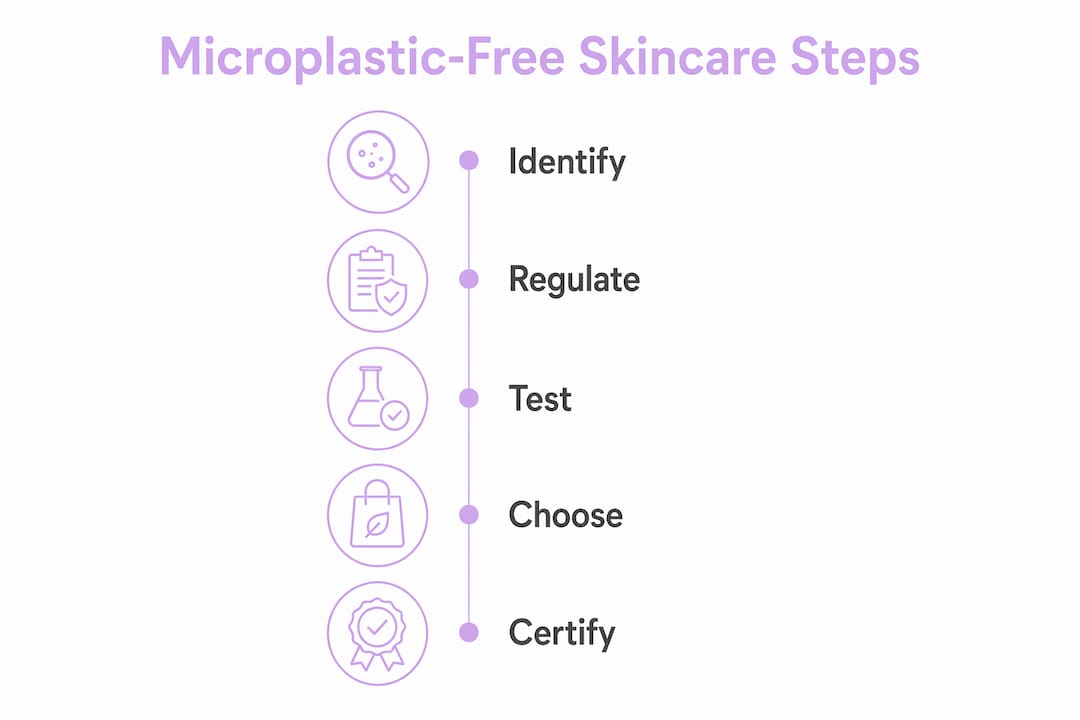
How to choose trustworthy microplastic-free skincare products
Reading an ingredient list is a reasonable starting point, but it is not sufficient on its own. Ingredient labels often fail to reveal microplastic content because polymer names are technical, inconsistent, and sometimes ambiguous about particle size or form. A polymer that behaves like a microplastic in a formulation may not be labelled as one.
Here is a practical framework for evaluating microplastic-free products:
- Look for third-party certification. The NATRUE label explicitly excludes microplastics and nanoplastics from certified products. It is one of the most transparent certification schemes available and reduces greenwashing risk significantly.
- Prioritise rinse-off products first. Shampoos, body washes, and facial cleansers are the highest-priority category because they go directly down the drain. Regulatory clarity is also stronger here, making verification more reliable.
- Use ingredient scanning tools. The PlasticFreeFuture app allows you to scan product barcodes and flag known synthetic polymer ingredients. It is not exhaustive, but it adds a useful layer of verification beyond label reading.
- Be sceptical of vague “natural” or “eco” claims. These terms carry no legal definition in most markets. A product labelled “natural” can still contain acrylates copolymer, carbomer, or nylon-12, all of which fall under microplastic definitions in EU regulations.
- Check for explicit composition claims. Brands that state “free from synthetic polymers” or reference compliance with EU Regulation 1223/2009 are making a verifiable claim. Vague “clean beauty” language without specifics is not.
Pro Tip: When evaluating a leave-on product like a moisturiser or foundation, search the ingredient list for terms ending in “-acrylate,” “-polymer,” or “-copolymer.” These are common indicators of synthetic polymer content that may qualify as microplastics under current EU definitions.
Exploring eco-friendly skincare options that combine certification with transparent ingredient sourcing gives you the clearest picture of what you are actually applying to your skin. The benefits of microplastic-free skincare extend beyond personal health. Every certified product you choose reduces demand for synthetic polymer ingredients across the supply chain.
Key takeaways
Microplastic-free skincare is most reliably verified through third-party certification and explicit composition claims, not ingredient lists or vague “natural” labels alone.
| Point | Details |
|---|---|
| Definition matters | Microplastic-free products exclude intentionally added synthetic polymer microparticles, not just microbeads. |
| Regulations vary by region | The EU and UK have the broadest restrictions; leave-on products remain less regulated globally. |
| Science is still developing | Current evidence shows limited dermal penetration, but chemical carrier risks and compromised skin barriers add uncertainty. |
| Certification is your best tool | NATRUE certification explicitly excludes microplastics and reduces greenwashing risk for consumers. |
| Rinse-off products are highest priority | Environmental impact through wastewater is clearest for rinse-off formulations, making them the best starting point. |
Why i think the “microbeads are gone” assumption is dangerous
People often assume the microbead problem was solved years ago. The UK banned them in 2018. Canada followed. The US acted in 2015. Job done, right? Not quite.
What those early bans addressed was a narrow category: solid polyethylene beads in rinse-off products. The broader world of synthetic polymer microparticles in cosmetics, including film formers in foundations, encapsulated fragrance carriers in moisturisers, and nylon powders in setting sprays, was largely untouched. Regulatory definitions have only recently started catching up, and leave-on products remain a significant grey area in most markets outside the EU.
What I find most telling is how the science is framed. The 2025 dermal exposure review did not conclude that microplastics are safe. It concluded that evidence is limited and heterogeneous. Those are very different statements. The absence of a confirmed harm pathway is not reassurance. It is a research gap.
From a practical standpoint, the consumers most at risk are those who use multiple leave-on products daily, particularly people with compromised skin barriers who may absorb more than the average person. A moisturiser, a foundation, a sunscreen, and a serum applied in sequence represent repeated, cumulative exposure. That cumulative picture is not yet well-studied.
My honest view is that the precautionary approach makes sense here. Choosing products with transparent ingredient sourcing and verified certification costs you nothing in terms of skin performance. Natural exfoliants like jojoba beads, sugar, and oat flour work. Botanical film formers exist. The technology to formulate without synthetic polymers is available. The question is whether brands choose to use it.
— Alex
How Zenchemylab supports your plastic-free skincare routine
Zenchemylab formulates its artisanal soaps, botanical cosmetics, and body care products around raw, natural ingredients with no intentionally added synthetic polymers. Every product reflects a commitment to ingredient purity that aligns directly with what microplastic-free skincare actually requires.
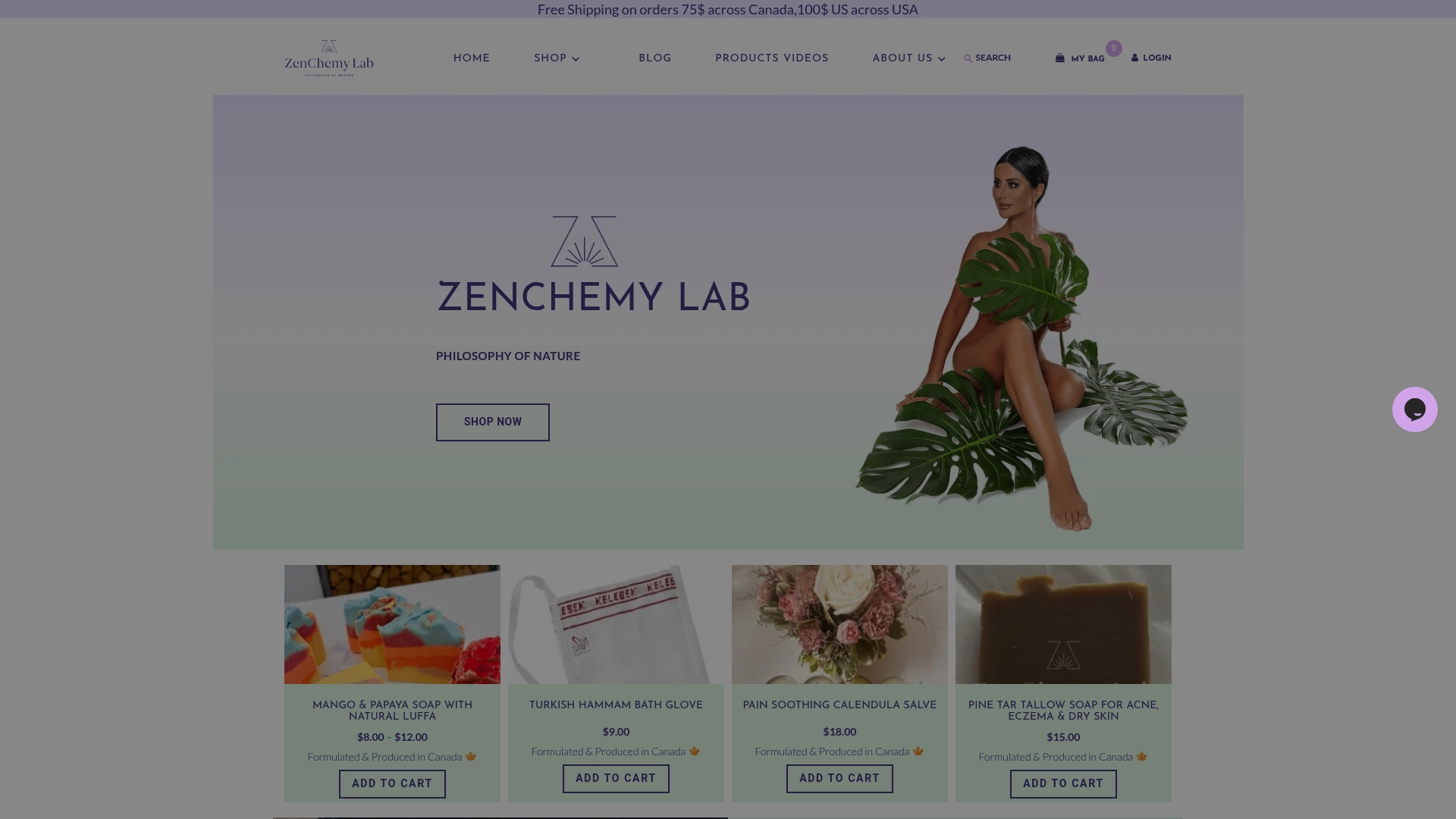
If you are building a cleaner routine from the ground up, Zenchemylab’s natural skin care collection is a strong starting point. You will find rinse-off and leave-on formulations made with plant-based ingredients, transparent sourcing, and no synthetic microparticles. For a broader look at building a routine that works with your skin and the environment, the natural skincare routine guide walks you through ingredient selection, layering, and what to look for on a label.
FAQ
What is microplastic-free skincare, exactly?
Microplastic-free skincare refers to products that contain no intentionally added synthetic polymer microparticles, including microbeads, film formers, and encapsulated particles. The EU and UK regulatory frameworks provide the most detailed legal definitions currently available.
Are “natural” or “eco” labels enough to confirm no microplastics?
No. “Natural” and “eco” carry no legal definition in most markets and do not guarantee the absence of synthetic polymers. Third-party certification from programmes like NATRUE is a more reliable indicator.
Is skincare without microplastics as effective?
Yes. Natural alternatives like jojoba beads, oat flour, and botanical film formers deliver comparable texture, exfoliation, and skin feel without synthetic polymer content. Formulation technology has advanced enough that performance is not compromised.
Which product types carry the most microplastic risk?
Shower gels and peeling gels show the highest microplastic presence based on 2026 research from Türkiye. Rinse-off products are also the highest environmental priority because they flow directly into wastewater systems.
How do i verify a product is truly microplastic-free?
Look for NATRUE certification, check for explicit “free from synthetic polymers” claims, and use tools like the PlasticFreeFuture app to scan ingredient lists. Relying on ingredient labels alone is not sufficient because polymer names are often ambiguous.
1 Comments