
Triple milled soap is a refined bar soap made by passing a soap mixture through heavy stainless steel rollers three times, removing excess moisture, air bubbles, and impurities to produce a denser, smoother, and longer-lasting bar. The process is also known as French milling, a technique rooted in artisan methods popularised by French soap makers in the 1700s and 1800s. If you have ever noticed a bar of soap that feels unusually firm, lathers richly from the first use to the last, and barely softens in a wet shower dish, you have likely held a triple milled bar.
Here is what sets it apart at a glance:
- ✅ Denser bar formed by removing excess water and air during milling
- ✅ Smoother texture from repeated grinding through stainless steel rollers
- ✅ Longer lasting than standard commercially produced bars
- ✅ Consistent lather from the first use to the last sliver
- ✅ Uniform ingredient distribution of oils, fragrances, and additives throughout the bar
- ✅ Reduced impurities making it a popular choice for sensitive skin
Table of Contents
- How triple milled soap is made
- What makes triple milled soap worth using
- Triple milled soap versus regular soap: key differences
- How to choose the right soap bar for your skin
- Zenchemylab’s perspective: handmade soap versus triple milled
- Explore Zenchemylab’s natural skincare collection
- Key takeaways
How triple milled soap is made
The manufacturing process behind triple milled soap is more involved than most people expect. It begins with saponification and ends with a bar that has been mechanically refined three times over.
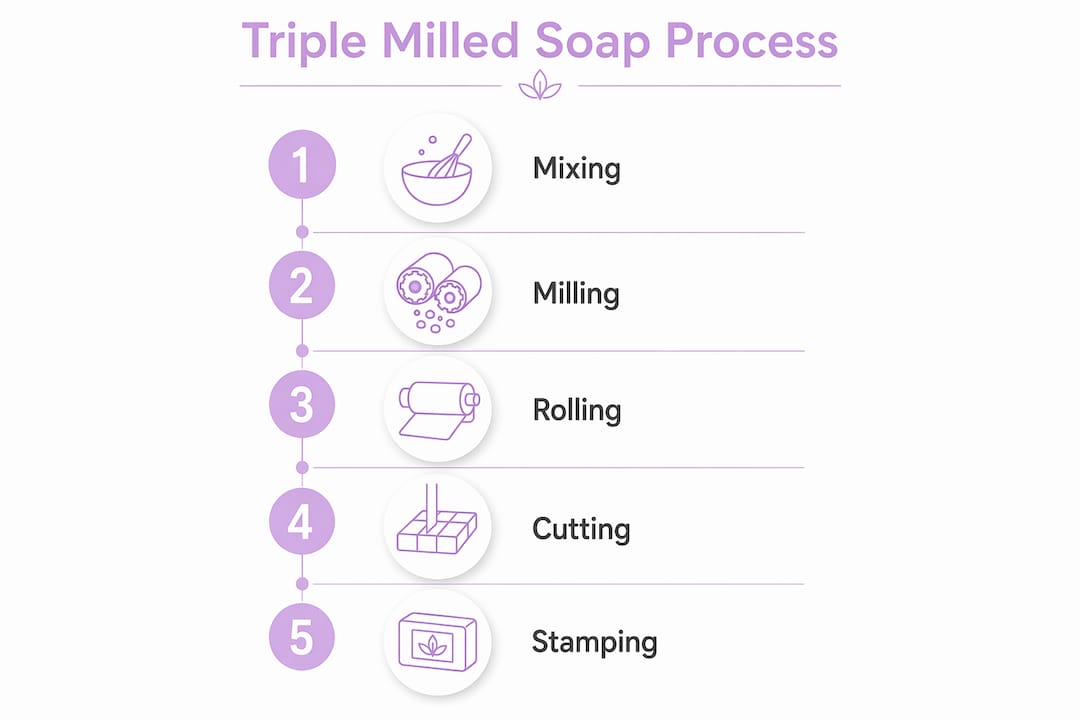
Step-by-step production sequence
- Saponification: Oils, fats, and butters are combined with lye (sodium hydroxide). The chemical reaction converts the mixture into a raw soap base.
- Customisation: Fragrance, colour, botanical extracts, or other additives are blended into the base while it is still pliable.
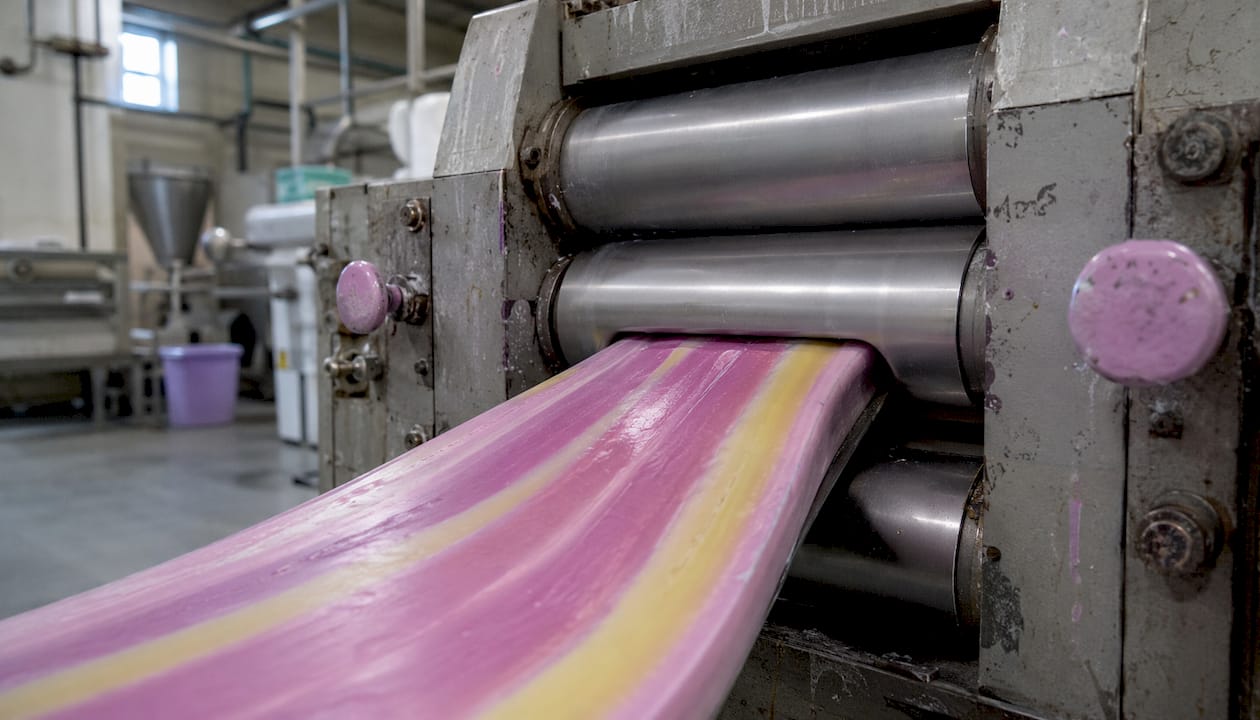
- First pass through the rollers: The soap mixture is fed through heavy-duty stainless steel rollers, which begin compressing and refining the paste.
- Second pass: The soap passes through again, further removing moisture and air pockets while blending ingredients more evenly.
- Third pass: The final pass through the rollers produces a uniform, dense paste with a noticeably smoother consistency. At Twincraft Skincare, a Vermont-based soap manufacturer with nearly 50 years of experience, the soap also passes through three mesh screens at this stage, which is where the “triple milled” name originates.
- Extrusion and cutting: The refined paste is pushed through an extruder and cut into bars of the desired size and shape.
- Pressing and curing: Bars are pressed into their final form and allowed to cure before packaging.
Pro Tip: Passing the soap mixture through the rollers more than three times is not better. Over-milling dries out the paste and produces a subpar, crumbly bar, so three passes is the deliberate sweet spot.
The entire process is capital-intensive and typically requires industrial machinery, which is why most triple milled soaps are mass-produced rather than handcrafted. The machinery investment is one reason these bars carry a higher price tag than a standard drugstore soap. You can explore the broader craft behind this in Zenchemylab’s guide to soap craftsmanship and skin benefits.
What makes triple milled soap worth using
The benefits of triple milled soap come directly from what the milling process physically does to the bar. This is not marketing language. It is chemistry and mechanics working together.
- Longer bar life: Triple milled soaps resist melting and crumble more slowly than average bars because the reduced water content makes them denser and harder from the start.
- Richer, more consistent lather: The even distribution of oils and surfactants throughout the bar means the lather stays rich and consistent from the first wash to the last.
- Purity: Removing excess moisture and air pockets during milling also removes impurities, which is why these bars are often recommended for people with reactive or sensitive skin.
- Fragrance retention: Because fragrance is blended uniformly into the dense bar, the scent holds more consistently throughout the bar’s life rather than fading quickly at the surface.
- Smoother skin feel: The refined texture produces a silkier feel on skin compared to a rougher, poured soap bar.
One nuance worth knowing: triple milled soap’s premium price reflects the machinery and labour investment in the milling process, not a guaranteed superior cleansing effect. The quality of the fats, oils, and additives in the formula is what ultimately determines how your skin feels after washing. Milling refines the structure; the recipe determines the benefit.
For a deeper look at which oils and botanicals actually nourish skin, Zenchemylab’s resource on best soap ingredients is a practical starting point.
Triple milled soap versus regular soap: key differences
Understanding what separates a triple milled bar from a standard one helps you decide whether the investment makes sense for your skin and your routine.
Manufacturing process
- Regular soap is typically poured into moulds after saponification and allowed to harden without further mechanical refinement.
- Triple milled soap undergoes three passes through steel rollers, producing a fundamentally different physical structure.
Texture and hardness
- Standard bars often feel softer and may develop a slimy residue in a wet soap dish.
- Triple milled bars are noticeably firmer and hold their shape far better under daily use.
Lather quality
- Regular bars can produce uneven lather, particularly as the bar ages and ingredients become less evenly distributed.
- Triple milled bars produce a richer lather that stays consistent because the ingredients are uniformly blended throughout.
Longevity
- A standard commercially produced bar dissolves relatively quickly, especially in a humid shower environment.
- Triple milled bars last longer than the average commercially produced bar because their reduced water content slows dissolution.
Common misconceptions
- ❌ Triple milled soap is not automatically harder than other soaps. Hardness depends on the fats used in saponification, not the milling process itself.
- ❌ Not all triple milled soaps use natural or premium ingredients. Some mass-market producers use the milling process with synthetic additives.
- ❌ Triple milled soap is not inherently better than all regular soaps. Performance depends heavily on the fats, oils, and additives in the formula.
How to choose the right soap bar for your skin
Picking the right bar comes down to your skin type, your ingredient priorities, and how you weigh longevity against cost.
Consider your skin type first
- Dry or sensitive skin: Look for triple milled bars formulated with shea butter, cocoa butter, or olive oil. The purity from milling reduces irritants, but the moisturising ingredients are what actually protect your skin barrier.
- Oily or acne-prone skin: A bar with kaolin clay or activated charcoal can help draw out excess sebum. Triple milling ensures these actives are evenly distributed rather than concentrated in patches.
- Normal skin: You have the most flexibility. Focus on fragrance preference and ingredient quality rather than the manufacturing method alone.
Evaluate the ingredient list
- ✔ Prioritise bars where a nourishing fat (shea, coconut, palm, olive) appears in the first few ingredients.
- ✔ Look for naturally derived fragrances such as essential oils rather than synthetic parfum if you have reactive skin.
- ✔ Check for unnecessary fillers or preservatives that can offset the purity benefits of milling.
Practical tips for testing and selecting
- Buy a single bar before committing to a multi-bar set, especially if you are trying a new formula.
- Store your bar on a draining soap dish. Even a dense triple milled bar will soften and crack if left sitting in standing water.
- Give a new bar at least two weeks of daily use before judging lather quality, since the outer layer of any bar behaves slightly differently than the interior.
Zenchemylab’s natural soap making checklist walks through ingredient selection in detail if you want to go deeper on formulation.
Zenchemylab’s perspective: handmade soap versus triple milled
At Zenchemylab, the conversation about triple milled soap comes up often, and the honest answer is more nuanced than most product descriptions suggest.
Triple milling is a refinement technique. It improves texture, removes moisture, and creates a more uniform bar. What it does not do is transform mediocre ingredients into a premium product. As the manufacturing experts at Twincraft Skincare put it, ingredient quality remains the main factor determining a soap’s cleansing ability and skin feel. Milling is the finishing process, not the foundation.
“Triple milled soap is a process that involves passing the soap mixture through stainless steel rollers three times, which refines the texture and removes excess moisture. This results in a denser, longer-lasting bar that is less likely to irritate sensitive skin due to its purity and uniform consistency.” — Dr. Helena Morris, Dermatologist and Skincare Researcher
Handmade soaps, including the artisanal bars Zenchemylab crafts from botanical ingredients, can offer comparable or better skin benefits depending on the formulation. A cold-process handmade bar retains naturally occurring glycerin, which is often stripped out in commercial soap production. Triple milled bars produced at industrial scale do not always preserve that glycerin. The result is that a well-formulated handmade bar can be just as nourishing, and sometimes more so, than a triple milled bar made with lower-quality base oils.
Pro Tip: When comparing a handmade bar to a triple milled one, read the ingredient list rather than the label. A bar listing shea butter, olive oil, and botanical extracts near the top will serve your skin better than a triple milled bar built on a synthetic base, regardless of how many times it passed through the rollers.
The Zenchemylab approach focuses on handmade versus commercially made soaps as a genuine quality question, not just a marketing distinction. Both types have real merit. The key is knowing what you are actually paying for.
Explore Zenchemylab’s natural skincare collection

If you are looking for soaps and body care products made with the same care and ingredient integrity that triple milling promises, Zenchemylab’s natural skin collection is a good place to start. Every product is formulated with botanical ingredients chosen for real skin benefit, not just label appeal. Whether you prefer artisanal bars or botanical body care, you will find options built around the same principle: quality ingredients, honestly made.
Key takeaways
Triple milled soap delivers a denser, longer-lasting bar through mechanical refinement, but the benefits for your skin depend on the quality of ingredients used.
| Point | Details |
|---|---|
| What triple milling does | Soap passes through stainless steel rollers three times, removing moisture, air, and impurities for a denser bar. |
| Longevity advantage | Triple milled bars resist melting and crumbling, lasting longer than the average commercially produced bar. |
| Milling vs. ingredients | The milling process refines structure; the fats and oils in the formula determine actual skin benefit. |
| Sensitive skin suitability | Reduced impurities make triple milled bars a popular choice for sensitive skin, provided the formula uses gentle ingredients. |
| Handmade comparison | Well-formulated handmade soaps can match or exceed triple milled bars in skin nourishment, particularly when they retain natural glycerin. |