Calendula (Calendula officinalis) is one of the most reliably soothing botanicals you can put on inflamed, sensitive, or irritated skin. A comprehensive PMC review confirms its anti-inflammatory, antioxidant, antimicrobial, and wound-healing activities across preclinical and some clinical studies. A small human trial of a small group of adults found topical calendula extract improved skin firmness and hydration, though the authors were clear that larger trials are needed before drawing firm conclusions. The evidence is promising but not yet definitive, which means you should treat calendula as a well-supported adjunct to your skincare routine rather than a standalone treatment.
Who benefits most? People with dry, reactive, or eczema-prone skin tend to see the clearest gains. Those managing minor wounds, chafing, or post-sun irritation also report relief.
- ✅ Start with a salve or cream formulation for ease of use
- ✅ Always patch-test before applying to a larger area
- ✅ Look for Calendula officinalis extract or infused oil on the ingredient list
Key takeaways
Calendula is a well-supported botanical for soothing inflamed and barrier-compromised skin, with the strongest evidence coming from preclinical anti-inflammatory data and a small but directionally consistent human hydration trial.
| Point | Details |
|---|---|
| Strongest evidence base | Preclinical anti-inflammatory and wound-healing data; one small human trial (n=21) showed improved firmness and hydration. |
| Best-suited skin concerns | Dry, cracked, or barrier-damaged skin; minor wounds; eczema support; post-sun irritation. |
| Formulation matters | Oil-based salves deliver triterpenoids more effectively than water-based toners; choose the format to match your goal. |
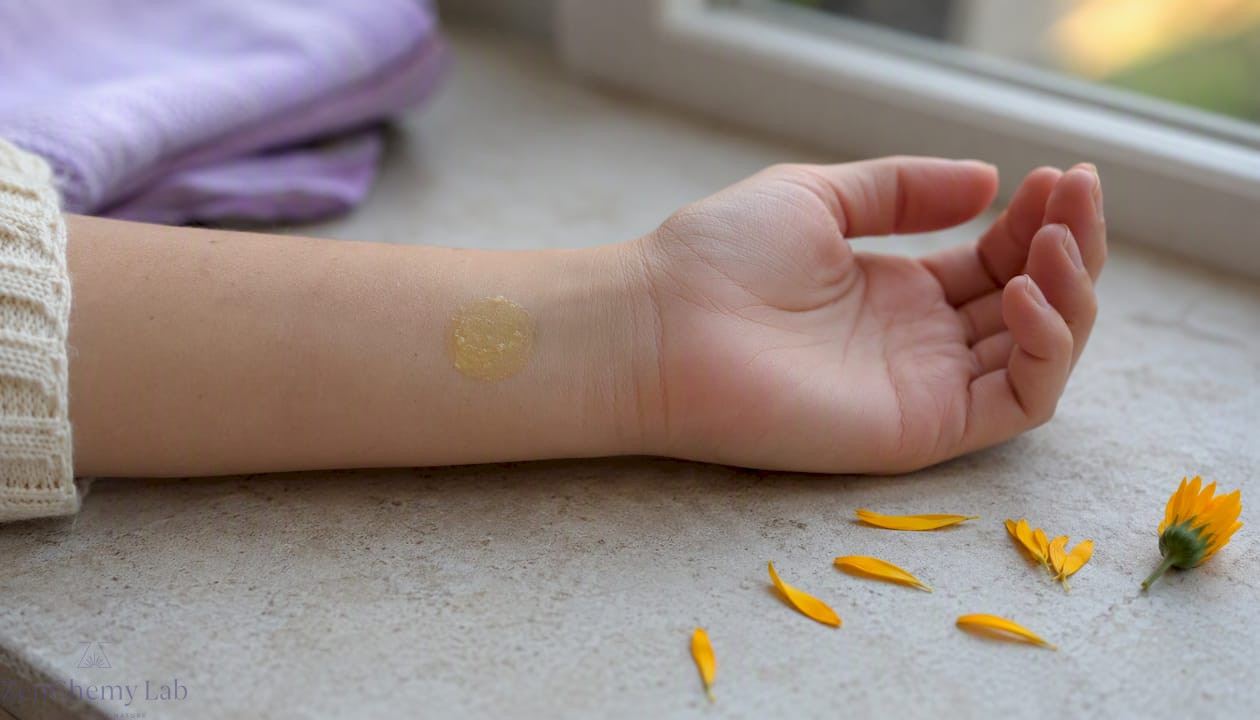
| Patch-test first | Asteraceae cross-reactivity is real; always test on your wrist for 24–48 hours before full application. |
| Zenchemylab option | Zenchemylab’s calendula balm and salve are lipid-rich, ingredient-transparent options available to Canadian shoppers. |
Table of Contents
- How calendula works on your skin
- Evidence-backed benefits: what studies actually show
- Practical forms of calendula and how to apply them
- Safety, allergies, and when to see a professional
- Calendula versus chamomile: which one suits your skin goals?
- How to pick calendula skincare products in Canada
- Clinical research snapshot: what the studies say and where the gaps are
- What a natural skincare maker actually thinks about calendula
- Zenchemylab’s calendula balm: a Canadian option worth trying
- Sources
How calendula works on your skin
Calendula officinalis, commonly called pot marigold, is a flowering plant in the Asteraceae family. Its petals are rich in four main groups of active compounds, each with a distinct role at the skin level:
- Flavonoids (isorhamnetin, quercetin): reduce the release of pro-inflammatory cytokines, helping to calm redness and swelling
- Triterpenoids (faradiol esters, oleanolic acid): the primary anti-inflammatory agents; they modulate COX-2 and TNF-α pathways, which are the same molecular targets many pharmaceutical anti-inflammatory drugs address
- Carotenoids (lutein, beta-carotene): act as antioxidants that neutralise free radicals and may contribute to photoprotective effects
- Coumarins: support microcirculation and have mild antimicrobial activity
Think of it as a layered defence system. Faradiol esters lower redness at the cellular level → the skin’s inflammatory response quiets → visible irritation fades. Carotenoids meanwhile mop up oxidative damage that accelerates skin ageing. The PMC review notes that researchers are also exploring nanoemulsion delivery systems to increase topical bioavailability of these extracts, which could make future formulations even more effective.
Skin problems these mechanisms plausibly address: acute inflammation, minor abrasions, erythema, dry and compromised barrier skin, and mild eczema flares.
The MDPI Applied Sciences review reinforces that both carotenoids and flavonoids contribute to wound-healing and photoprotective potential, while calling for standardised extracts and larger clinical trials to confirm the full picture.
Evidence-backed benefits: what studies actually show
The evidence for calendula spans several skin concerns, but the strength varies considerably by condition. Here is a clear-eyed summary.
Soothing and redness. Preclinical data is consistent: calendula’s triterpenoids suppress the same inflammatory pathways implicated in chronic skin redness. Human data is thinner, but the mechanistic logic is sound.
No large-scale human wound-healing RCT exists yet, so this remains a well-supported but preclinical finding.
Diaper rash. One infant study cited by WebMD found that a higher share of lesions healed within three days with bentonite clay than with calendula cream. Calendula still performed, but the comparator outperformed it in that specific trial. Formulation and comparator choice matter here.
Hydration and firmness. The 21-person human study showed real improvements, but 21 participants is a small sample. Treat this as a promising signal, not a proven outcome.
Eczema and sensitive skin. Healthline’s overview lists eczema among the six common topical uses supported by preliminary evidence, alongside wound care, diaper dermatitis, psoriasis, and general skin health. The anti-inflammatory mechanism is plausible for eczema management, though dedicated large-scale trials are lacking.
Evidence snapshot: The strongest support for calendula in skincare comes from preclinical anti-inflammatory and wound-healing data. Human clinical evidence exists but remains small-scale. Use it with realistic expectations.
Practical forms of calendula and how to apply them
Calendula reaches your skin in several forms, and the format you choose changes what the product actually delivers.
Common product forms:
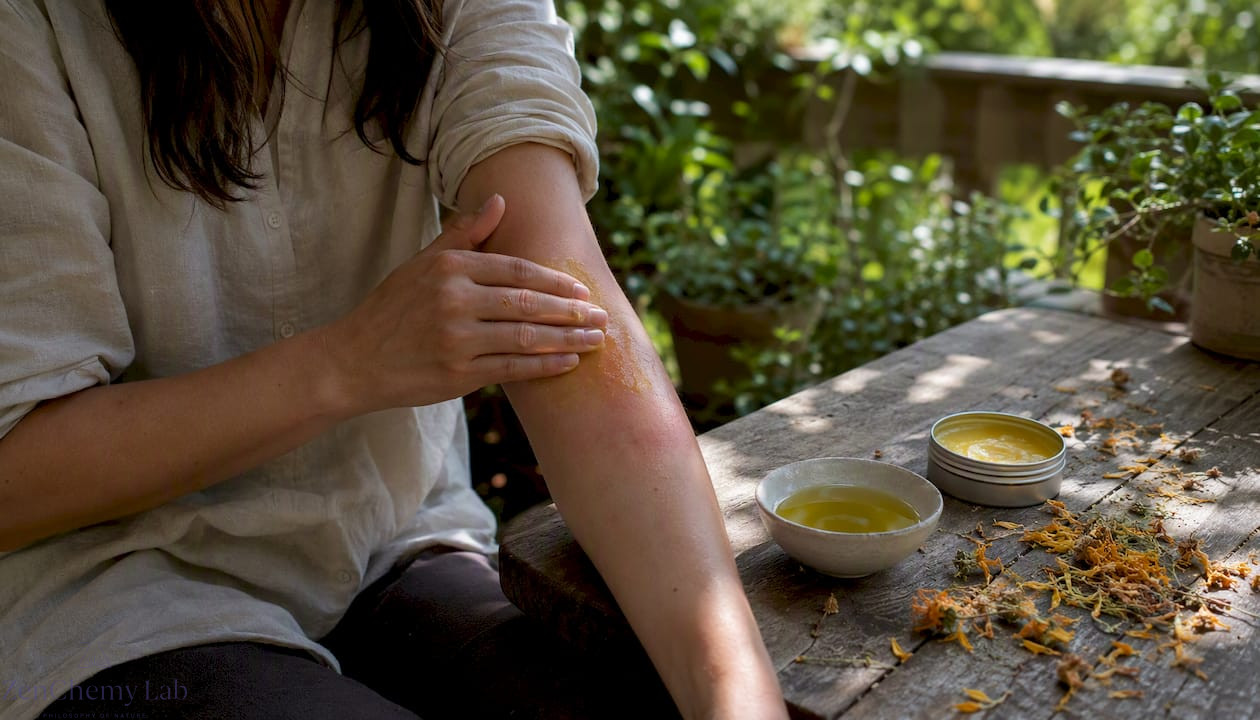
- Infused oil: Dried petals macerated in a carrier oil (sunflower, jojoba, or olive). Ideal base for salves and balms; delivers lipid-soluble triterpenoids and carotenoids directly to the skin barrier
- Tincture: Alcohol-based extract; higher concentration of water-soluble flavonoids, but alcohol can be drying on sensitive skin
- Cream or lotion: Oil-in-water emulsion; good for daily face and body use; delivers both lipid and water-soluble constituents
- Ointment or salve: High-lipid, low-water base (beeswax or shea); excellent for barrier repair, minor wounds, and chapped skin; longer contact time on skin
- Aqueous extract: Water-based; used in toners and serums; delivers flavonoids but not the oil-soluble triterpenoids
Pro Tip: An oil-based salve or ointment delivers faradiol esters (the key anti-inflammatory triterpenoids) far more effectively than a water-based toner or serum. If your goal is barrier repair or wound-care support, choose a lipid-rich formulation over an aqueous one.
How to patch-test calendula (step by step):
- Apply a small amount of the product to the inside of your wrist or behind your ear
- Leave it on for 24 hours without washing
- Check at 24 hours and again at 48 hours for redness, itching, or swelling
- If no reaction appears, proceed with normal application
- If irritation develops, discontinue use and consult a healthcare provider
Application tips:
- For inflamed or irritated spots, apply a thin layer of salve or cream once or twice daily
- On the face, layer calendula cream under your regular moisturiser or use it as the final step in your routine
- For minor wounds or chafed skin, a thicker ointment applied after cleansing works well as a protective barrier
- Combining calendula with a fragrance-free moisturiser can enhance the barrier-repair effect without overwhelming sensitive skin
Calendula fits naturally into a natural skincare routine as a targeted treatment step rather than a full replacement for your existing products.
Safety, allergies, and when to see a professional
Calendula is well-tolerated by most people, but it carries a meaningful allergy risk that you should know before using it.
Allergy risk: the Asteraceae connection
Calendula belongs to the Asteraceae (daisy) family, which also includes ragweed, chrysanthemums, marigolds, and chamomile. If you have a known allergy to any of these plants or to seasonal pollen from ragweed, your risk of a cross-reactive skin reaction is higher. Verywell Health specifically flags cross-reactivity as a reason to patch-test before any first use.
Signs of an allergic reaction to watch for:
- Redness, hives, or a rash at the application site
- Itching or burning that worsens after application
- Swelling, especially around the eyes or lips
- Contact dermatitis (weeping, crusting skin)
Who should be cautious or avoid calendula:
- People with confirmed Asteraceae allergies
- Those with a history of seasonal hay fever triggered by ragweed or chrysanthemums
- Pregnant or breastfeeding individuals (limited safety data exists for topical use; consult your healthcare provider before using)
- Young infants (use only under paediatric guidance)
Practical safety steps:
- Always patch-test, even if you have used calendula before in a different formulation
- Avoid applying tinctures (alcohol-based) to broken or raw skin, as alcohol can sting and delay healing
- Stop use immediately if you notice spreading redness, blistering, or systemic symptoms such as difficulty breathing
When to consult a clinician: If a wound shows signs of infection (increasing warmth, pus, spreading redness), if eczema worsens rather than improves, or if you experience any systemic reaction after topical use, see a healthcare provider. Calendula is an adjunct option, not a replacement for medical care.
Calendula versus chamomile: which one suits your skin goals?
Both calendula and chamomile are anti-inflammatory, antioxidant botanicals with overlapping mechanisms. The MDPI review positions them as complementary rather than interchangeable, with different dominant compounds pointing toward different clinical niches.
Where they overlap:
- Both contain flavonoids and terpenoids that reduce inflammatory cytokine activity
- Both show antioxidant activity that may slow oxidative skin ageing
- Both are used in topical creams, toners, and serums for sensitive skin
Where they diverge:
- Chamomile (particularly Matricaria chamomilla) is rich in bisabolol and apigenin, which have deeper immunomodulatory effects. It tends to work well for reactive redness, rosacea-prone skin, and hypersensitivity reactions. A Zenchemylab chamomile facial toner is one practical way to incorporate it into a daily routine.
- Calendula leads on wound-healing and collagen-stimulating evidence, driven by its triterpenoid and carotenoid content. It is the stronger choice for dry, cracked, or barrier-compromised skin.
Recommendation by goal:
- ✅ Reactive redness or rosacea tendencies → chamomile
- ✅ Dry, cracked, or barrier-damaged skin → calendula (oil-based)
- ✅ Minor wound care or post-procedure skin → calendula
- ✅ General antioxidant daily care → either; combine if your skin tolerates both
- ✅ Eczema flares → calendula for barrier support; chamomile for reactive itch
The key takeaway from the mechanistic evidence is that chamomile tends to calm the immune response more deeply, while calendula tends to rebuild and protect the physical barrier more effectively.
How to pick calendula skincare products in Canada
Canadian shoppers have good access to calendula products, but label literacy makes the difference between a product that works and one that contains only a trace of the active botanical.
What to look for on the label:
- “Calendula officinalis” listed by its Latin name (as extract, flower extract, or infused oil) — generic “marigold” may not be the same species
- Solvent type: look for “sunflower oil,” “jojoba oil,” or “olive oil” for lipid extracts; “water” or “glycerin” for aqueous extracts
- Extract ratio or percentage: not always listed, but a higher ratio (e.g., 1:5 or 5%) generally indicates a more concentrated product
- Preservative system: aqueous products need a preservative; look for phenoxyethanol, sodium benzoate, or natural alternatives like rosemary extract
- Full ingredient list (INCI format): the shorter and more recognisable the list, the fewer unnecessary additives
A note on Natural Product Numbers (NPNs): In Canada, an NPN is required only for natural health products taken internally (capsules, tinctures for oral use). Topical cosmetics like creams, salves, and oils are regulated under the Food and Drugs Act as cosmetics, not NHPs, so you will not see an NPN on a topical calendula cream. This is normal and does not indicate lower quality.
Realistic concentrations: Most over-the-counter topical products contain calendula extract at concentrations that are not always disclosed, but formulations with calendula listed in the top half of the ingredient list are more likely to deliver meaningful amounts of active constituents.
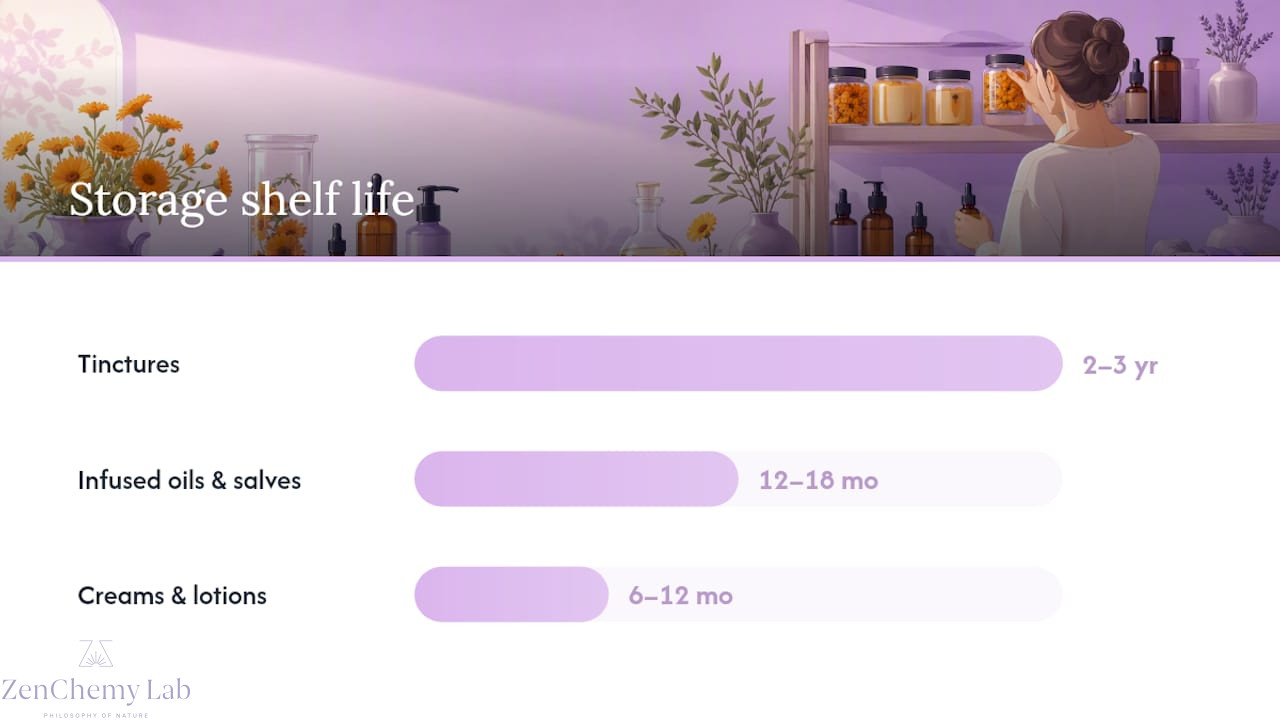
Storage and shelf life:
- Infused oils and salves: store in a cool, dark place away from direct sunlight; typical shelf life is 12–18 months; discard if the oil smells rancid or the colour changes significantly
- Creams and lotions: refrigerate after opening if they contain no preservatives; use within 6–12 months of opening
- Tinctures: alcohol-based tinctures are the most stable; store at room temperature away from heat; shelf life can extend to 2–3 years when stored properly
- Opened products: always use clean hands or a spatula to avoid contaminating the product with bacteria
Prefer brands that provide third-party lab results or transparent sourcing information. For botanical cosmetics specifically, knowing where the plant material was grown and how it was extracted gives you a clearer picture of what you are actually applying to your skin.
Clinical research snapshot: what the studies say and where the gaps are
The clinical evidence for calendula is real, but it is thinner than the popularity of the ingredient might suggest. Here is an honest look at the key data points.
| Study focus | Size / type | Headline outcome | Key limitation |
|---|---|---|---|
| Skin firmness & hydration | n=21, human topical | Improved firmness and hydration; slight elasticity gain | Very small sample; no control group noted |
| Diaper rash vs. bentonite clay | Infant comparative trial | 52% healed with calendula vs. 86% with bentonite at 3 days | Single comparator; infant-specific context |
| Wound healing | Animal and in vitro | Accelerated closure; reduced inflammation markers | Preclinical only |
| Anti-inflammatory mechanisms | Mechanistic / in vitro | COX-2 and TNF-α suppression confirmed | No large human RCT |
| Radiodermatitis | Mixed clinical review | Inconclusive; adjunct positioning only | Heterogeneous studies |
The Memorial Sloan Kettering Cancer Center integrative medicine page reflects this cautious positioning well: calendula is listed as an option within integrative care for minor skin problems, not as a replacement for standard treatment. Their assessment of radiodermatitis evidence is mixed, which underscores that calendula is not universally effective for every skin condition.
The practical implication: use calendula with confidence for soothing and barrier support, where the mechanistic and preliminary human evidence aligns. For serious skin conditions, treat it as a complement to, not a replacement for, professional care.
What a natural skincare maker actually thinks about calendula
There is a tendency in the natural beauty space to either oversell botanicals as miracle cures or dismiss them as unproven folk remedies. Calendula sits in neither camp, and that is precisely what makes it worth using.
The mechanistic evidence is coherent. The anti-inflammatory pathways are well-characterised. The small human trial showing improved hydration and firmness is modest in scale, but it points in the same direction as the preclinical data. When an ingredient’s mechanism, preclinical results, and preliminary human data all align, that is a meaningful signal, even without a large RCT to seal it.
What gets overlooked in most ingredient guides is the formulation question. A calendula toner with the extract listed near the bottom of a 30-ingredient list is not the same product as a salve where calendula-infused oil is the primary carrier. The delivery vehicle determines which constituents reach your skin and at what concentration. For barrier repair and wound-care support, a lipid-rich salve is not just a preference; it is a functionally different product. Readers interested in how natural ingredients interact with skin biology will find useful context in this guide to natural inflammation support.
The patch-test step is non-negotiable, not because calendula is particularly dangerous, but because Asteraceae cross-reactivity is real and unpredictable. Someone who has used lavender products without issue can still react to calendula. Skipping the patch test is the single most common mistake people make with botanical skincare.
Zenchemylab’s calendula balm: a Canadian option worth trying

If you are ready to put the evidence to work, Zenchemylab’s calendula balm is a straightforward, ingredient-transparent option made for Canadian skin. Formulated as a lipid-rich salve, it delivers calendula’s active triterpenoids and carotenoids in a carrier that stays on the skin long enough to support barrier repair, soothe minor irritation, and calm dry or chapped areas. The ingredient list is short, the sourcing is transparent, and there are no synthetic fragrances or unnecessary fillers.
Zenchemylab also offers a calendula salve suited to wound-care support and a healing balm for more intensive barrier repair. All products ship within Canada. This is general skincare information, not medical advice; patch-test before first use and consult a healthcare provider for persistent or worsening skin conditions.
Browse the full range and read more about science-forward natural beauty to find the formulation that fits your routine.
Sources
- An Updated Review on the Multifaceted Therapeutic Potential of Calendula officinalis L.
- Exploring the Therapeutic Potential of Calendula and Chamomile in Dermatology: From Anti-Inflammatory and Antioxidant Properties to New Therapeutic Perspectives
- Calendula: Health Benefits and Uses
- Calendula Oil: Uses and Benefits
- Calendula (Memorial Sloan Kettering Cancer Center integrative medicine page)
This article is general information, not a substitute for advice from a qualified doctor. Consult a qualified healthcare professional about your own circumstances before acting on anything here.