
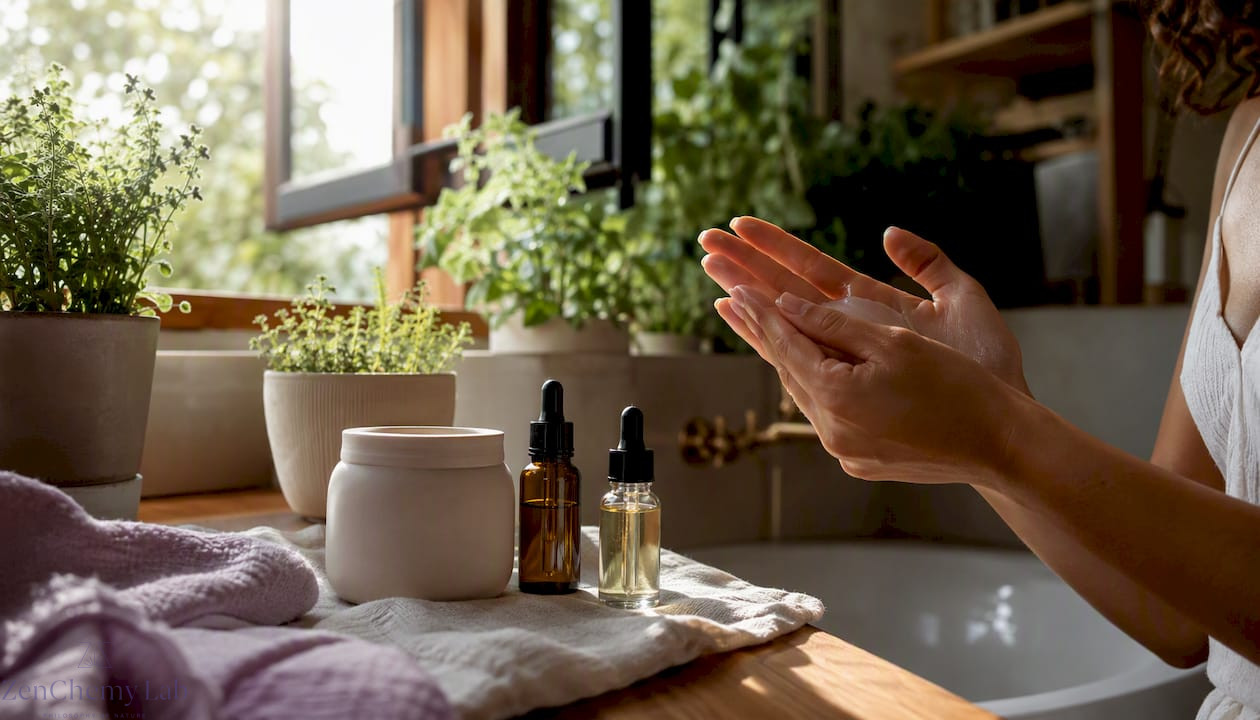
Apply your serum before your moisturizer. That single rule, backed by the American Academy of Dermatology and dermatologists broadly, holds for the vast majority of routines. The logic is straightforward: serums are thin, concentrated, and formulated to penetrate. Moisturizers are thicker and designed to sit on the surface, sealing everything underneath.
The main exceptions worth knowing up front:
- ✅ Standard rule: Serum first, then moisturizer.
- ⚠️ Facial oils (non-emulsion): Go after moisturizer, not before — they are occlusive and will block thinner actives.
- ⚠️ Occlusive balms or slugging products: Apply last, over moisturizer, as a sealant.
- ⚠️ Prescription topicals: Follow your dermatologist’s specific instructions, which may differ.
Key takeaways
Serum goes before moisturizer in every standard routine because water-based actives must reach the skin before heavier creams or oils create a surface barrier.
| Point | Details |
|---|---|
| Serum before moisturizer | Apply serum first so concentrated actives absorb into skin before the moisturizer seals the surface. |
| Thinnest to thickest | Layer all products from lightest texture to heaviest — serums, then creams, then oils or balms last. |
| Wait time for actives | Allow 15–30 seconds for lightweight serums; wait 1–2 minutes after retinol or AHA treatments before moisturizing. |
| Sunscreen always last in AM | Apply SPF after moisturizer every morning, especially when using retinoids or AHAs that increase sun sensitivity. |
| Zenchemylab pairings | Zenchemylab’s water-based botanical serums are formulated to apply before their day creams or night balms, following the thin-to-thick rule. |
Table of Contents
- Why the order of serum and moisturizer actually matters
- What serums and moisturizers each do — and when you need both
- Step-by-step AM and PM layering routines
- How long to wait between serum and moisturizer
- Where face oils and multiple serums fit in your routine
- Choosing serums and moisturizers by skin type
- Common layering mistakes and safety cautions
- How Zenchemylab recommends using serums and moisturizers
- The part of the routine most people get wrong
- Zenchemylab pairings that put this routine into practice
- Sources
Why the order of serum and moisturizer actually matters
The rule is not arbitrary. It comes down to simple physics and skin biology.
Lightweight, water-based serums are designed to penetrate skin layers, while heavier creams and oils sit on the surface and can block absorption if applied first. Think of your skin as a sponge. A dry sponge absorbs water instantly. Cover it in oil first, and water beads right off. Your skin behaves similarly: apply a rich cream before a vitamin C or hyaluronic acid serum, and you have effectively locked those actives out.
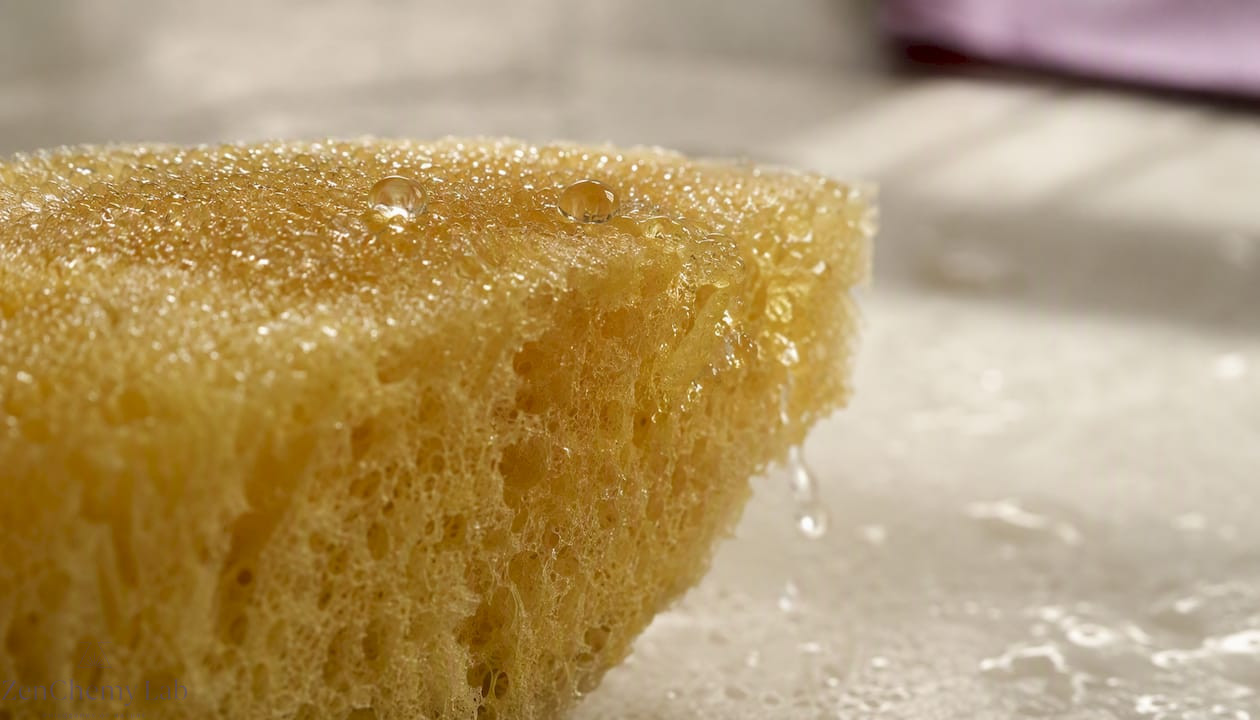
Clinical guidance recommends ordering products from thinnest to thickest. Serums go after cleansing and before moisturizer, and moisturizers reduce transepidermal water loss (TEWL) — the process by which skin loses moisture to the air. A well-formulated moisturizer acts like the “mortar” in the skin’s “brick and mortar” barrier, sealing hydration and active ingredients in place once they have been absorbed.

Water-based serums carry actives with smaller molecular structures. They sink into the epidermis more readily than the lipids, emollients, and occlusives found in creams. Applying a cream first creates a film that physically impedes that penetration. The Medical News Today consensus confirms this: serums go before moisturizers because they are typically water-based and more readily absorbed when applied directly to skin.
Pro Tip: If your serum pills or rolls off, your moisturizer is likely still wet. Pat your serum in gently with your fingertips, wait 15–30 seconds, and apply moisturizer only once the serum feels slightly tacky rather than wet.
What serums and moisturizers each do — and when you need both
These two products serve genuinely different purposes, and understanding that distinction helps you use them in the right order with the right expectations.
Serums are concentrated delivery vehicles. They carry targeted actives — vitamin C for brightening, hyaluronic acid for deep hydration, niacinamide for pore refinement and barrier support — in a lightweight, usually water-based formula. Their job is to get specific ingredients into the skin.
Moisturizers work at the surface. They combine humectants (like glycerin, which draw water to the skin), emollients (like plant oils and fatty acids, which smooth and soften), and occlusives (like shea butter or beeswax, which reduce TEWL). Their job is to hydrate, protect, and seal.
When can you skip one?
- Skip the serum if your skin is balanced and your only goal is basic hydration — a good moisturizer alone can maintain the barrier.
- Skip the moisturizer only if your serum is a rich, occlusive-heavy formula (rare) or your skin is very oily and a lightweight serum alone feels sufficient.
- Use both when you have a targeted concern (pigmentation, fine lines, acne) alongside a need for barrier support — which describes most people most of the time.
Step-by-step AM and PM layering routines
Morning routine
- Cleanser — Gentle, pH-balanced wash. A handcrafted artisan soap formulated without harsh sulphates keeps the skin barrier intact.
- Toner or essence (optional) — Water-based, applied with a pat.
- Antioxidant serum — Vitamin C or a niacinamide serum. Apply 2–3 drops, press gently into skin. Practical guides recommend antioxidant serums in the morning for daytime protection against environmental stressors.
- Eye cream (optional) — Tap around the orbital bone with your ring finger.
- Moisturizer — A pea-sized amount, pressed and smoothed over the face and neck.
- Sunscreen — Always the final step in the morning. SPF 30 or higher, applied generously.
Evening routine
- Cleanser — Double-cleanse if you wore sunscreen or makeup.
- Targeted serum — Retinol or a restorative botanical serum applied to clean, slightly dry skin. Retinol is best applied to clean, dry skin at night, with moisturizer afterward to buffer any irritation.
- Hydrating serum (optional) — If you use both a treatment serum and a hydrating serum, apply the treatment serum first (thinnest, most active), then the hydrating serum.
- Moisturizer or night balm — Richer than your daytime formula is fine; this is when your skin repairs itself.
- Facial oil or occlusive balm (optional) — Seal everything in as the very last step.
A few application notes:
- Press and pat rather than rub — rubbing can pill products and create friction on sensitised skin.
- Use a small amount for each product, enough to cover the skin comfortably without excess.
- Sunscreen is a morning-only step; never skip it when using retinoids or AHAs.
How long to wait between serum and moisturizer
Most people wait longer than they need to — or not at all, which can cause pilling.
Practical guides suggest allowing 15–30 seconds for lightweight serums to settle; heavier or acid-based treatments may benefit from a short wait or drying period. Here is a simple framework:
- Water-based hydrating serums (hyaluronic acid, aloe): 15–30 seconds is enough. These absorb quickly and you can layer immediately.
- Vitamin C serums: Wait 30–60 seconds. Vitamin C is pH-sensitive and benefits from a moment to settle before you change the skin’s surface environment.
- AHA/BHA exfoliating serums: Wait 1–2 minutes. Acids need time to work at their active pH before a moisturizer neutralises the surface.
- Retinol treatments: Apply to dry skin, wait 1–2 minutes, then moisturize. Applying moisturizer too quickly can dilute the retinol; applying it too late can increase irritation.
The “3-minute rule” you may have seen refers to post-shower moisturising: applying moisturizer within 3 minutes of patting skin dry locks in residual surface moisture. That timing applies to moisturizer application, not to the wait between serum and moisturizer.
Quick timing answers:
Can I apply moisturizer right after serum? For lightweight hydrating serums, yes. For actives like retinol or AHAs, a short wait of 1–2 minutes reduces irritation risk.
Does waiting longer improve results? Not meaningfully beyond the times above. Waiting 10 minutes is not better than 60 seconds for a standard hyaluronic acid serum.
Where face oils and multiple serums fit in your routine
Face oils are the most commonly misplaced product in a skincare routine. Because they feel light and “natural,” many people apply them before their moisturizer or even before their serum. That is the wrong order for most oils.
The general rule for face oils:
- ✅ Serum → Moisturizer → Facial oil (as a sealant, last step)
- ✅ Lightweight water-emulsion oils (formulated to absorb) can sometimes go between serum and moisturizer — check the product’s own instructions.
- ❌ Pure plant oils (rosehip, jojoba, marula) applied before a water-based serum will block absorption.
Layering multiple serums:
- Apply in order from thinnest to thickest texture.
- If two serums have similar textures, apply the one targeting your primary concern first.
- Avoid combining retinoids with strong AHAs in the same application — use them on alternating nights instead.
- Dermatologists emphasise that minimal, focused routines reduce the chance of irritation — more is not better when combining multiple active serums.
Pro Tip: If products are pilling when you layer multiple serums, try pressing each one in fully before moving on, and reduce the amount of each product by half. Less product, properly absorbed, outperforms more product sitting on the surface.
Choosing serums and moisturizers by skin type
The layering order stays the same regardless of skin type. What changes is the formula you choose for each step.
Oily or combination skin:
- Serum: lightweight, water-based formulas with niacinamide (pore-refining) or salicylic acid (BHA, for congestion).
- Moisturizer: gel or gel-cream textures, non-comedogenic, no heavy waxes or mineral oil.
Dry skin:
- Serum: hyaluronic acid or a peptide serum to draw and retain moisture.
- Moisturizer: richer creams with ceramides, shea butter, or plant-based occlusives to reinforce the barrier. Clinical reviews confirm moisturizers support barrier repair and reduce transepidermal water loss, making a well-chosen moisturizer especially important for dry skin types.
Sensitive or reactive skin:
- Keep the routine short: one serum maximum, one moisturizer.
- Favour niacinamide — DermNet notes it is broadly well tolerated — over stronger actives.
- Always patch-test a new product on your inner arm for 24–48 hours before applying to your face.
Acne-prone skin:
- Serum: niacinamide or a low-concentration salicylic acid serum.
- Moisturizer: non-comedogenic, fragrance-free, and lightweight. Skipping moisturizer to “dry out” breakouts often backfires — dehydrated skin overproduces sebum.
- Space actives: do not layer a BHA serum with a retinol on the same night.
Common layering mistakes and safety cautions
The most frequent mistake is applying moisturizer before serum — usually because the moisturizer is the familiar, comfortable product and the serum feels like an add-on. Reversing that order means your active ingredients never fully reach the skin.
Other mistakes worth avoiding:
- Over-layering actives: Stacking retinol, an AHA, a BHA, and vitamin C in one routine is a fast path to a damaged barrier and reactive skin. Choose one or two actives per routine.
- Skipping sunscreen: Retinoids and AHAs increase photosensitivity. The Skin Cancer Foundation advises that using these ingredients without daily SPF raises the risk of UV damage. Sunscreen is non-negotiable in the morning.
- Skipping the patch test: A new serum with a potent active (retinol, a high-concentration AHA) should be tested on the inner arm for 24–48 hours before full-face use.
Pro Tip: If your skin becomes red, tight, or flaky after adding a new active, strip the routine back to cleanser and moisturizer for 3–5 days. Once the barrier calms, reintroduce one product at a time. A barrier-repair moisturizer with ceramides or plant lipids is your best recovery tool.
A note on skin barrier function and topical therapy: systematic reviews confirm that improper layering of actives can increase irritation risk, particularly when the skin barrier is already compromised. Simpler routines are safer routines.
How Zenchemylab recommends using serums and moisturizers
Zenchemylab’s formulations are built around the thin-to-thick principle from the ground up. The face serums in the Zenchemylab range are water-based and botanically concentrated, designed to be applied directly to clean skin before any cream or balm. That is not just a usage instruction — it reflects how the actives are suspended in the formula.
Here is how the layering rule applies to Zenchemylab’s product categories:
- ✅ Hydrating serum + day cream: Apply the hydrating serum first to deliver botanical humectants to the skin, then follow with a day cream to seal moisture and support the barrier through the day.
- ✅ Restorative serum + night balm: In the evening, the serum delivers concentrated botanical actives while skin is in repair mode; the night balm goes on last to create an occlusive layer that reduces overnight TEWL.
- ✅ Facial oil: If you add a Zenchemylab face oil, it goes after the balm or cream — the final sealant in the routine.
Zenchemylab’s artisanal approach means each product is formulated with a specific texture and absorption profile in mind. The face serum range carries product tags like “hydrating serum” and “face serum” that signal exactly where each formula sits in the routine. When in doubt, the thinner the texture, the earlier it goes.
Pro Tip: When layering Zenchemylab botanical serums, use the “press and hold” technique: press 2–3 drops between your palms, then press your palms gently against your face for 5 seconds. The warmth helps botanical actives absorb more readily than rubbing does.

The part of the routine most people get wrong
The serum-before-moisturizer rule is simple once you understand the physics. What I find more interesting is how rarely people question the amount they are using, not just the order.
Most serums are formulated to be effective at 2–3 drops. Using more does not accelerate results — it increases the chance of pilling, irritation, and wasted product. The same logic applies to actives: a focused routine with one well-chosen serum will outperform a layered stack of five competing actives every time. Skin does not reward complexity. It rewards consistency and compatibility.
My practical approach: one antioxidant serum in the morning, one targeted treatment at night, and a moisturizer that matches the season. In winter, a richer cream; in summer, a lighter gel. Patch-test anything new, give it four to six weeks before judging results, and resist the urge to add more products when something is not working immediately. Simplify first, then adjust.
Zenchemylab pairings that put this routine into practice
If you want to apply the serum-then-moisturizer rule without the guesswork of building a routine from scratch, Zenchemylab’s natural skincare formulations are designed with exactly this layering logic in mind.

Two pairings worth considering:
For daytime hydration: A Zenchemylab hydrating serum applied to clean skin, followed by a botanical day cream to lock in moisture and protect the barrier through the day. Both are formulated without synthetic fragrances or harsh preservatives, so they layer cleanly without pilling.
For overnight restoration: A concentrated restorative serum in the evening, followed by a richer night balm as the final occlusive step. This pairing works with your skin’s natural overnight repair cycle.
Browse the full natural skin collection to find the pairing that fits your skin type, and check each product page for the full ingredient list and usage notes. Every Zenchemylab formula is cruelty-free and made in Canada.
Sources
These sources informed this guide and are worth bookmarking for deeper reference:
- The Correct Order for Skin Care Products
- Apply skin care in a certain order | AAD
- PubMed Central article supporting moisturiser role in barrier function


2 Comments